Case 02 · Exhibition
The Independent Food City
Can a city feed itself?
Overview
Plattform Stad is an innovation platform with the goal that 30% of all food consumed in Malmö should be produced within the city before 2034.
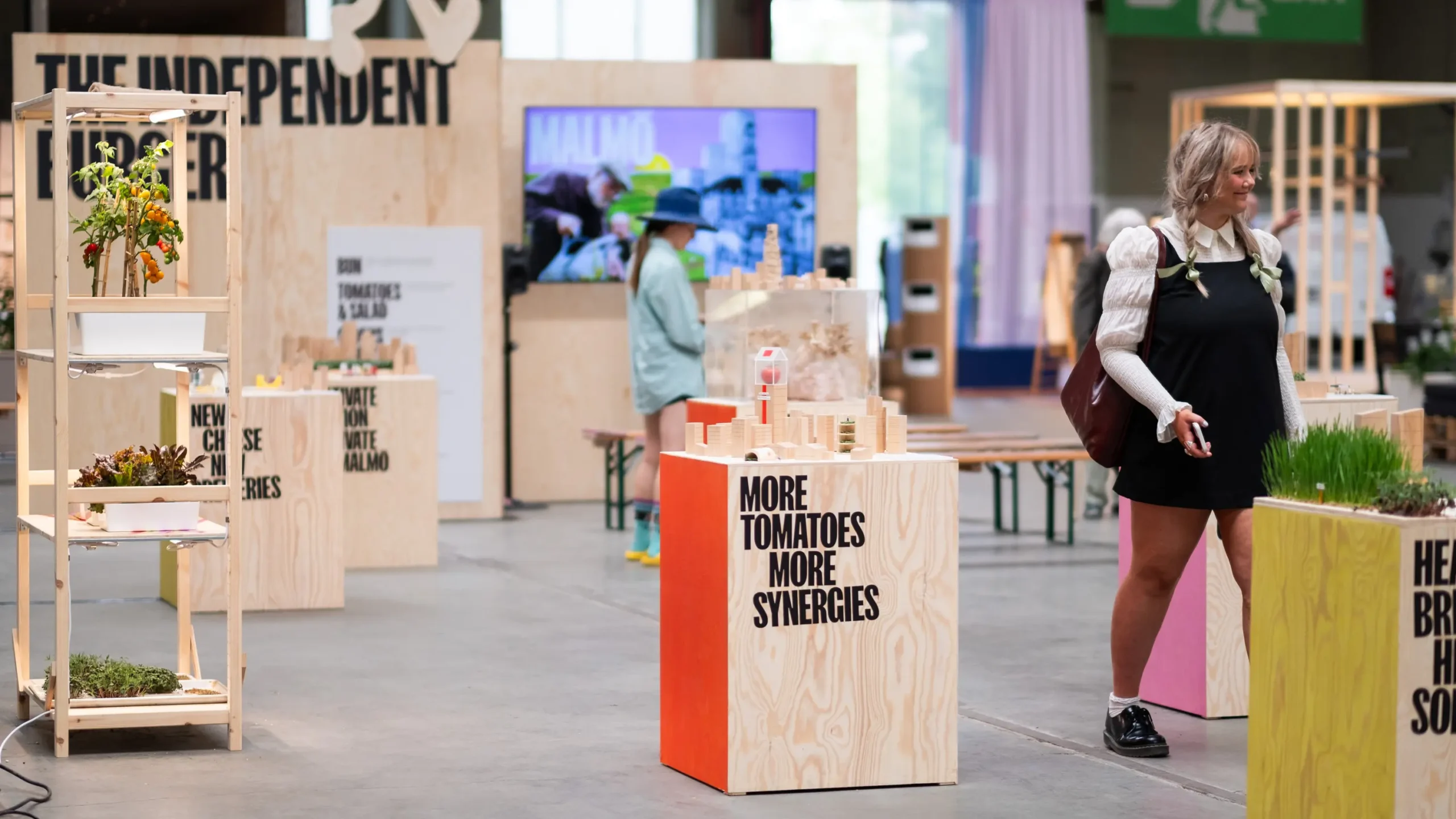
To make that goal tangible, we built The Independent Burger: an exhibition where one of our least sustainable dishes is rebuilt, ingredient by ingredient, from food grown in Malmö's own neighbourhoods. It later became The Independent Food City, a permanent exhibition about the future of food in Malmö.
A burger is about as far from local and sustainable as food gets, which is what made it a good starting point. Each part of it became a way into a different part of the future food system, and a different part of Malmö.
- My role
- I joined in the build phase during my internship at SALLY, EY Doberman's futures lab, when the burger, the miniatures and the neighbourhood structure were already set. I led the design of the dioramas, developing with the team what each neighbourhood should say and how to show it. I built the scenes and chose the materials to make them work. After the internship, I came back as a freelancer to help turn it into a permanent exhibition.
- Team
- Andreea Blaga, Ana Stanišić, Dan Henriksson Storm, Ellinore Funck, Fredrik Elmegren, Johan Frössen, Kristoffer Lundholm, Mikael Arman, Nanna Bergh, Tove Blomgren, Tuva Larsson
- Client
- Malmö Stad and Innovation Skåne
- Recognition
- Silver, Svenska Designpriset 2024 in the NGO/CSR/Goodwill category
Building a scene
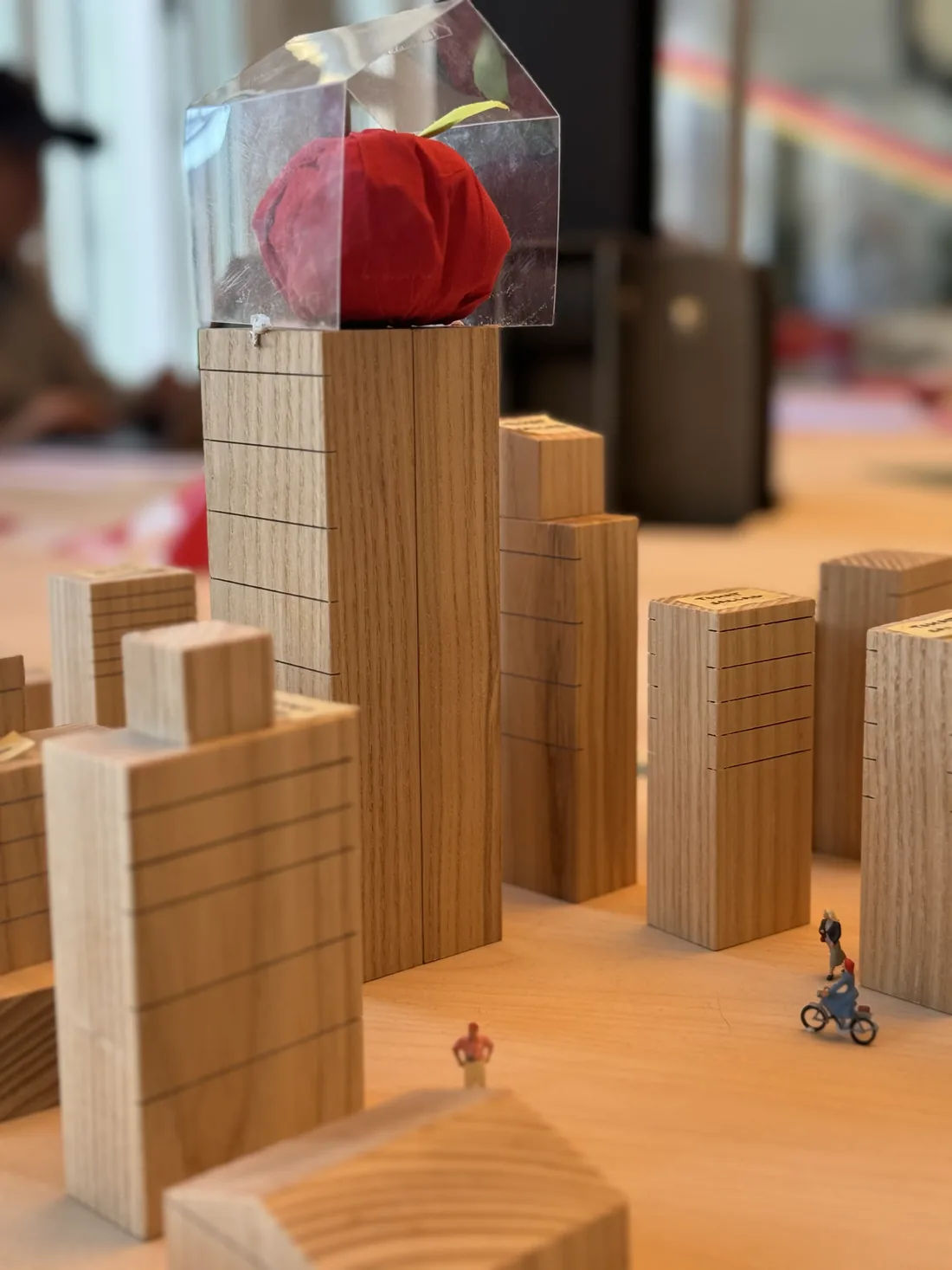
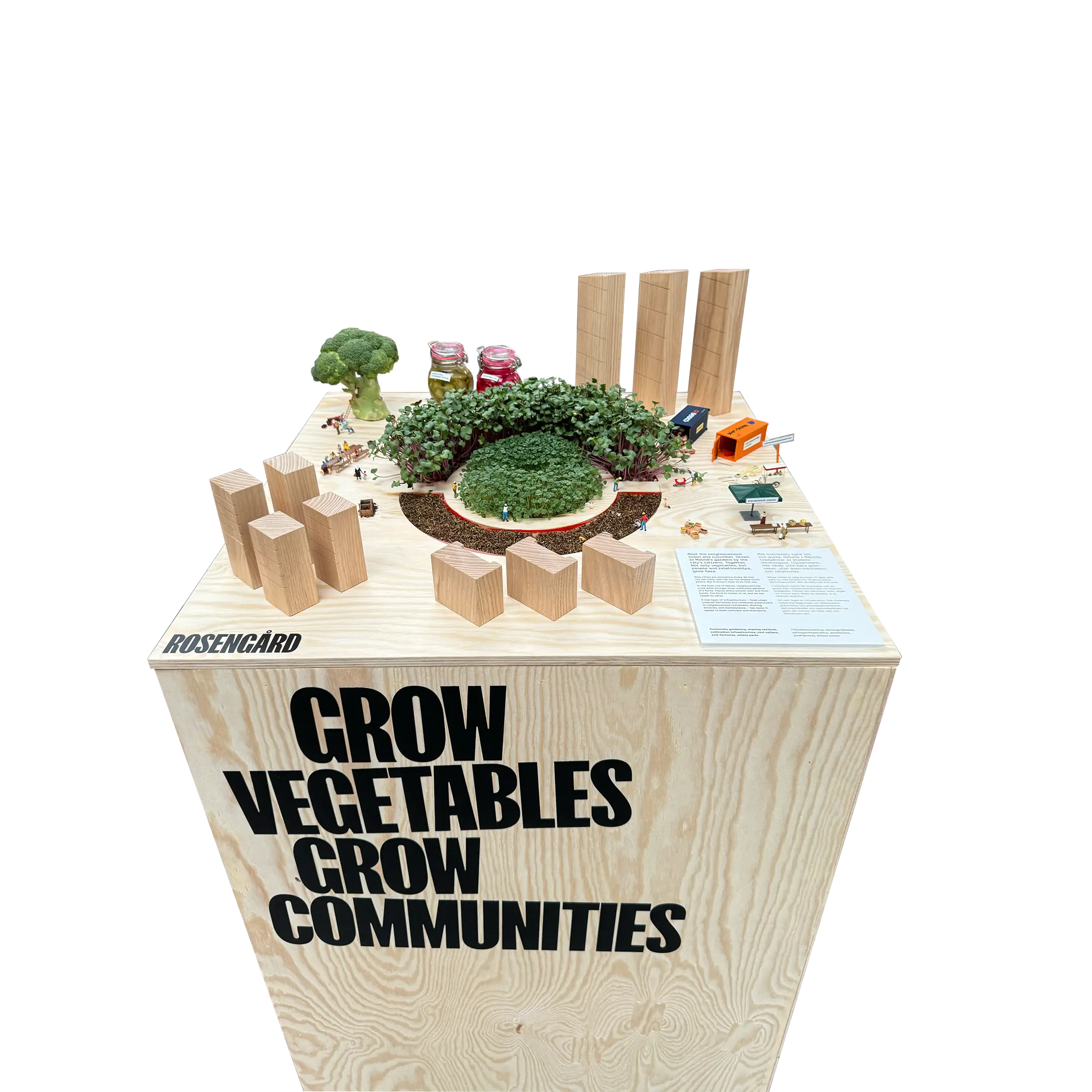
Each podium had to work on two levels. From a distance it should read as an overview of a neighbourhood, but up close the eye should find the details and wander through the scene on its own, so that people create their own story depending on what they see.
One rule we kept throughout was to mix life-size objects with miniatures. The contrast made the scenes more playful, and since no one expected realism, we could exaggerate what mattered and leave out what didn't. Each scene also got its own mood, and small stories that made people stop and look closer.
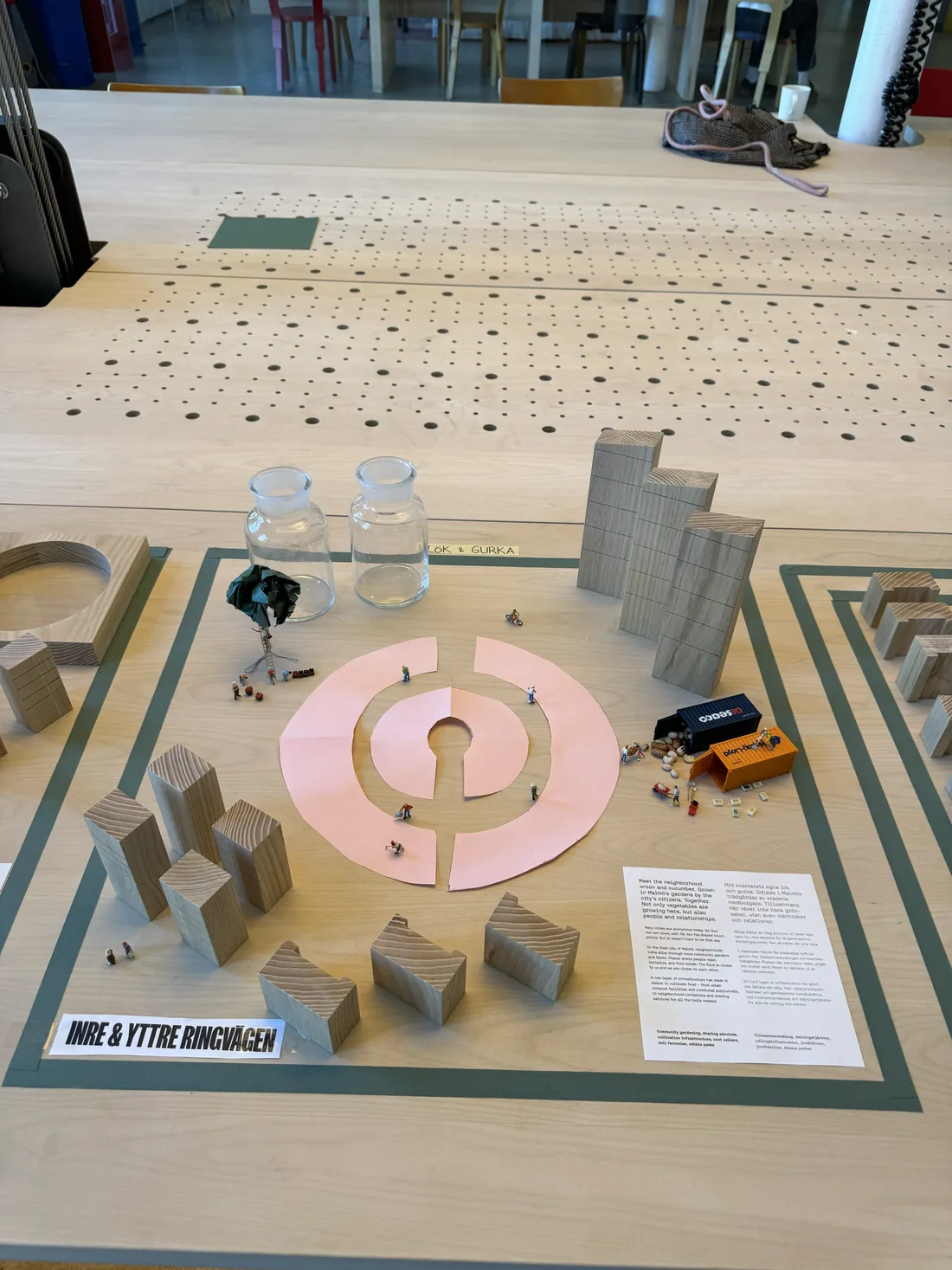
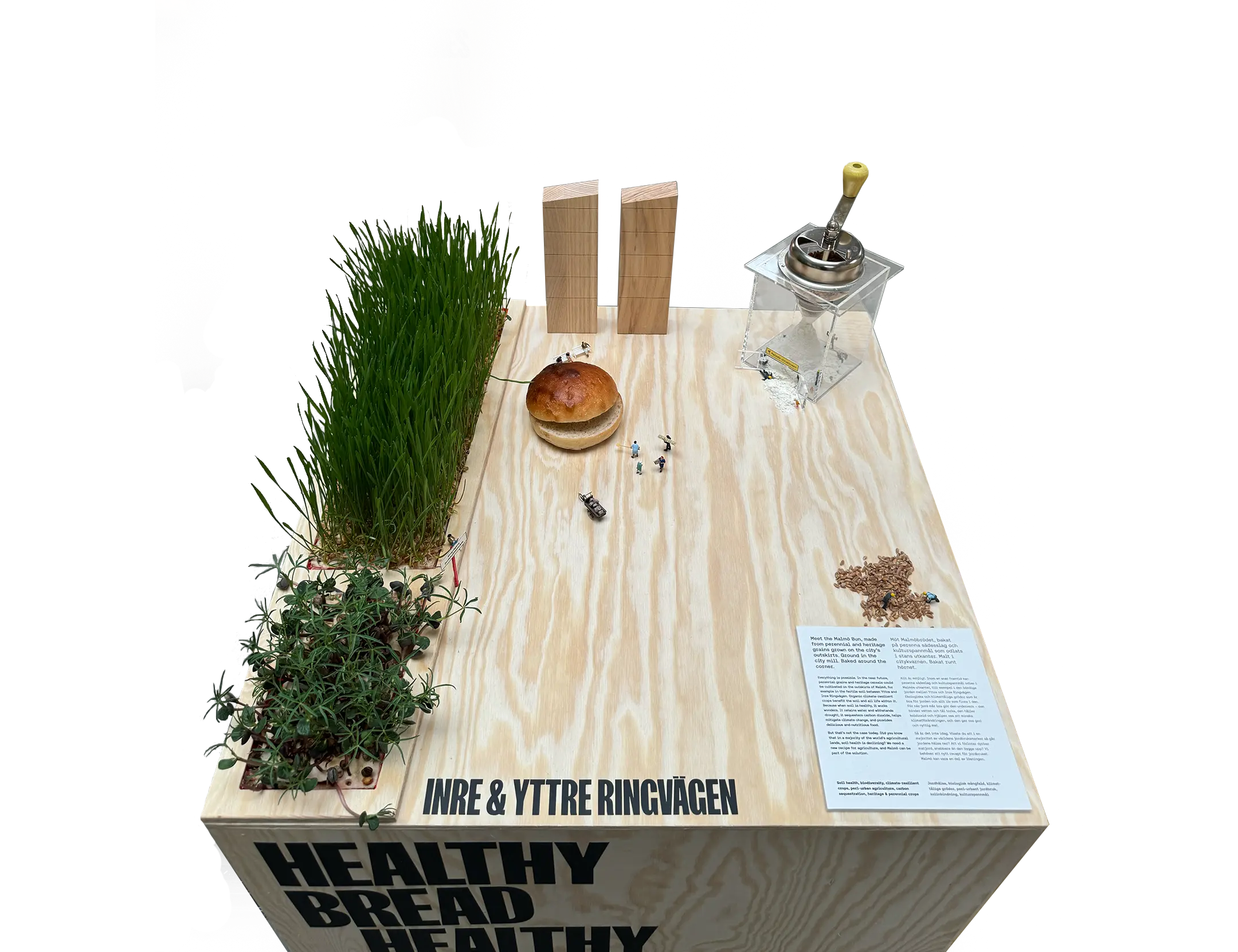
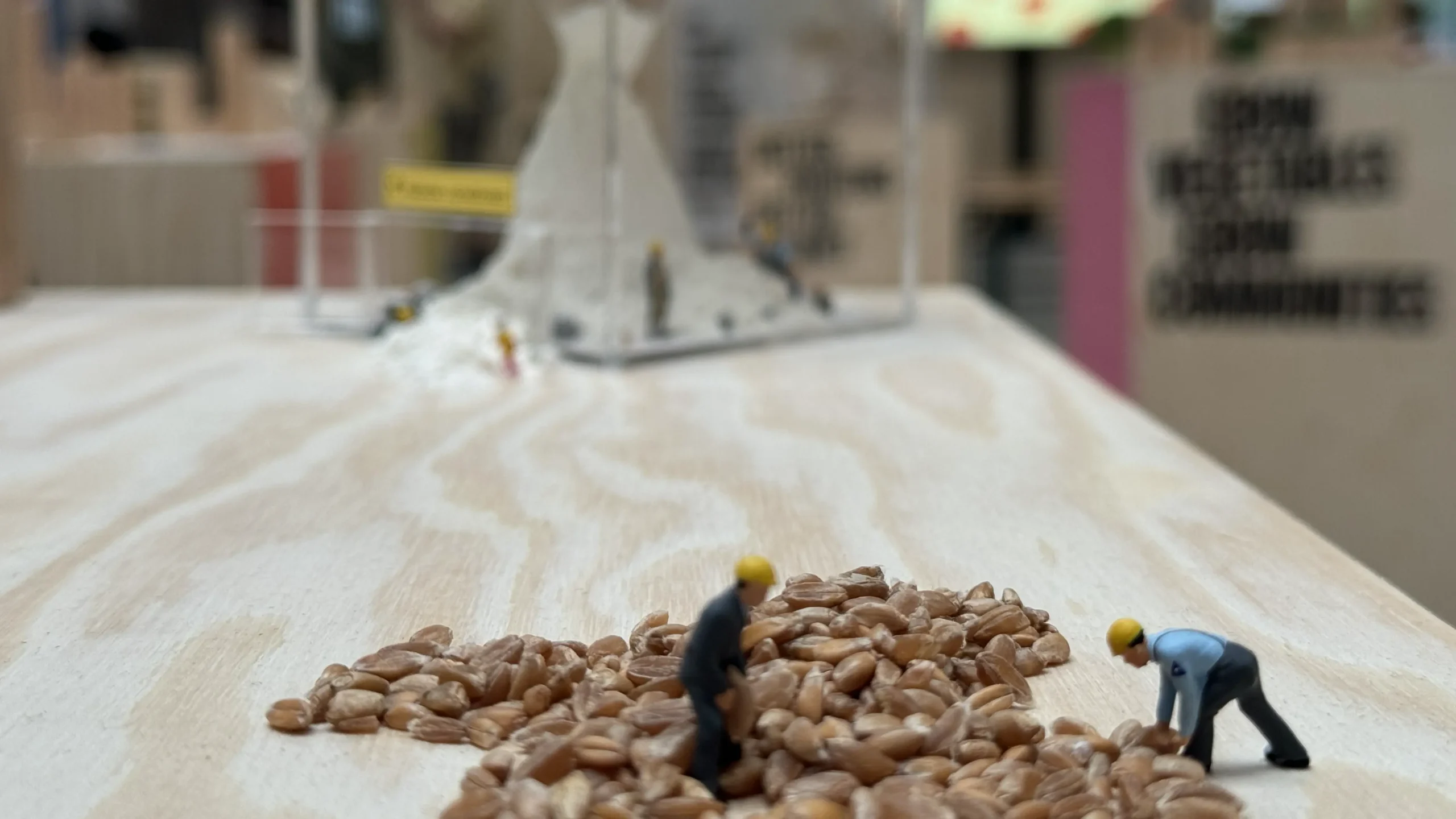
The Bun Yttre and Inre Ringvägen
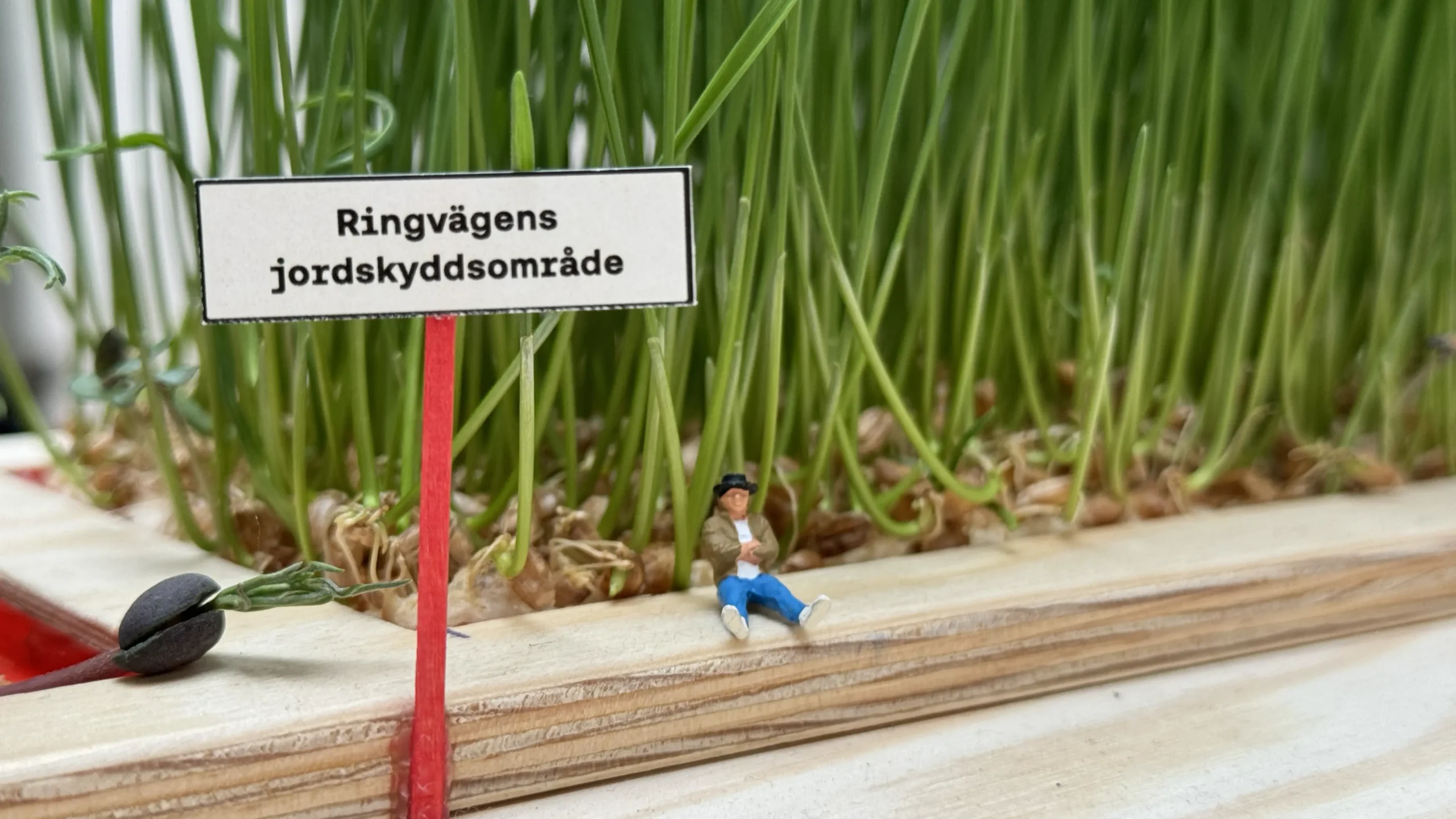
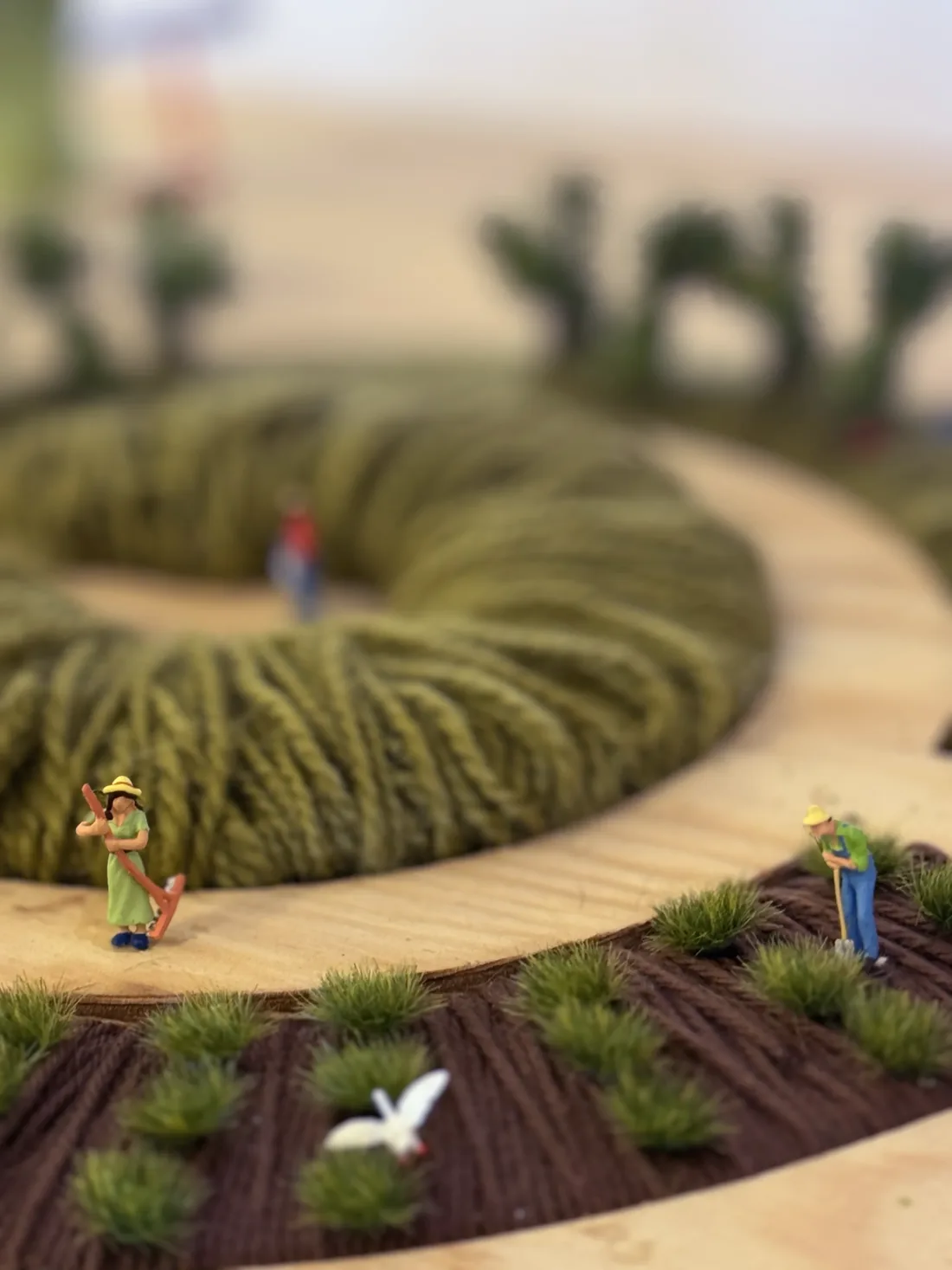
On Malmö's outskirts, climate-resilient crops build healthy soil that retains water, resists drought, stores carbon and produces nutritious food.
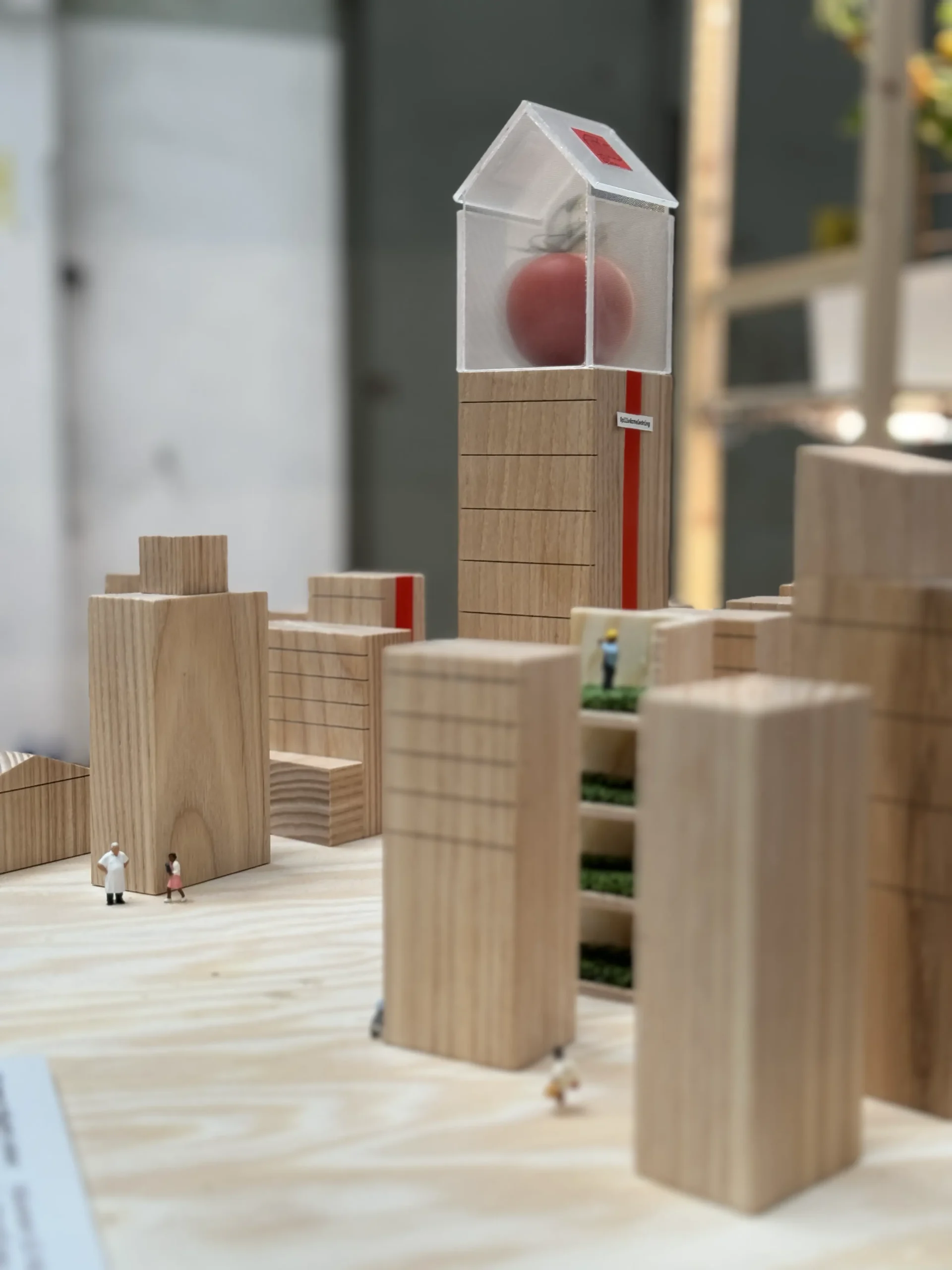
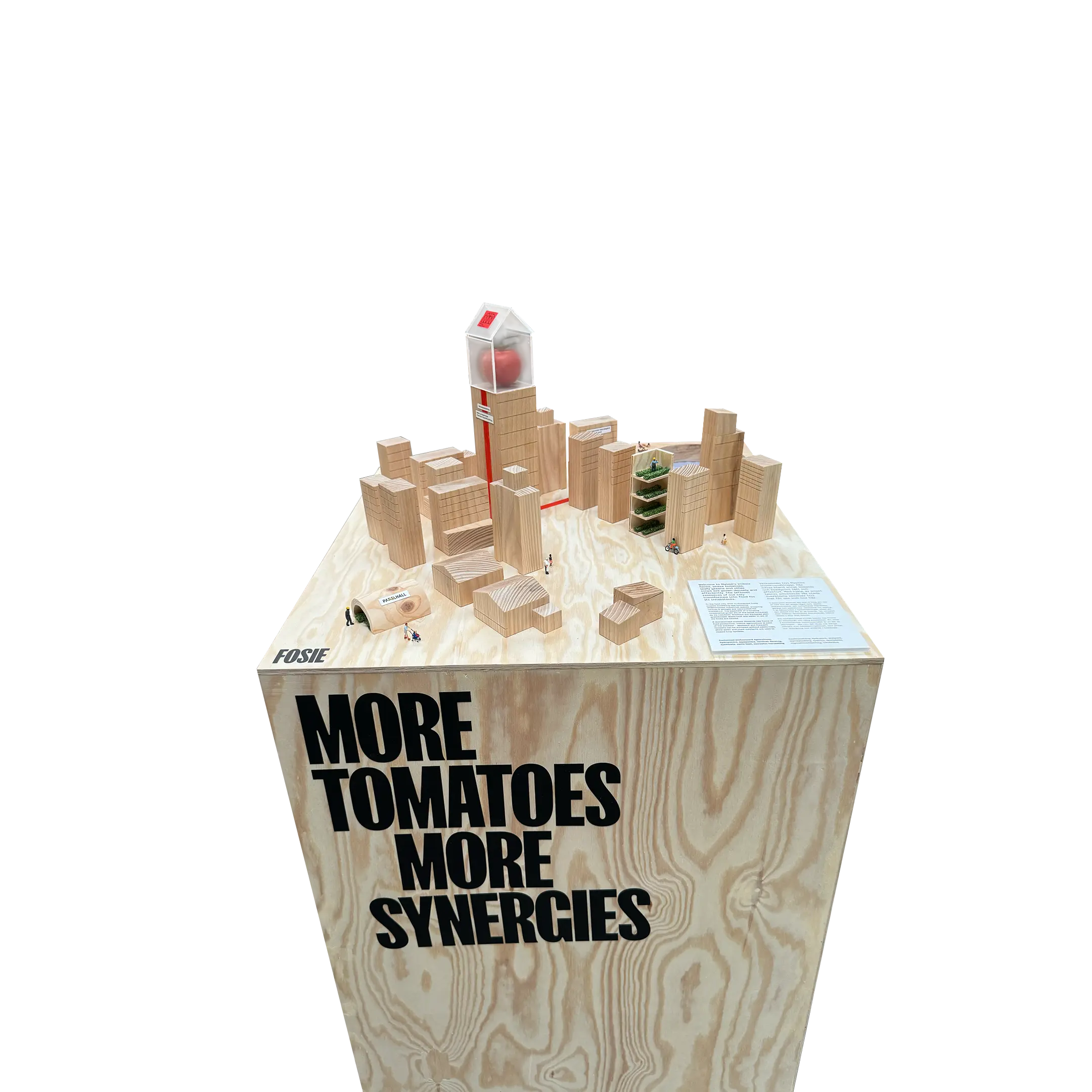
The Veggies Fosie
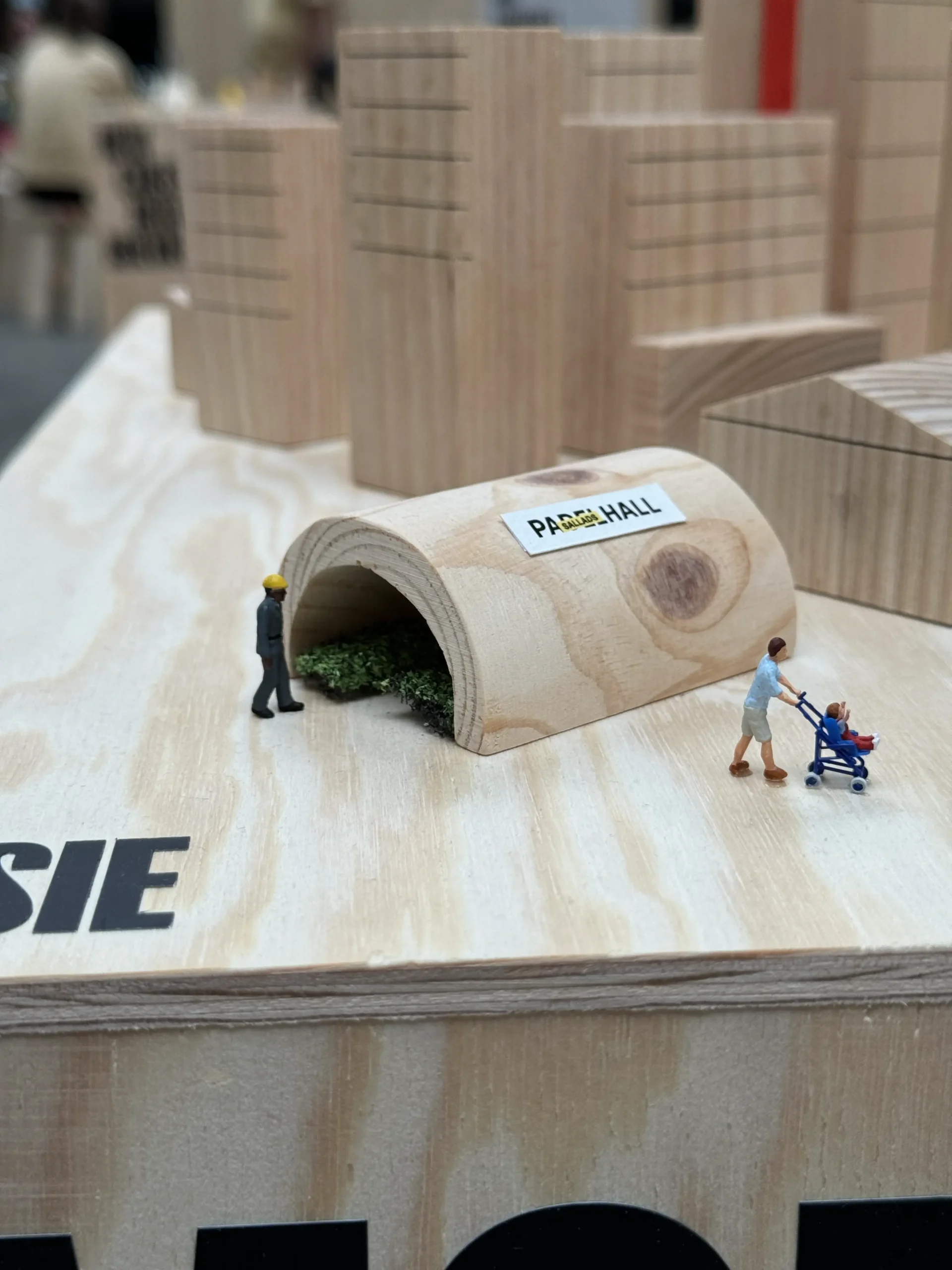
A city that looks the same on the surface but has changed on the inside. Rooftops, garages and industrial spaces become year-round indoor farms. An old padel centre is now a salad hall, showing how the city's buildings get new purposes.
The Veggies Rosengård
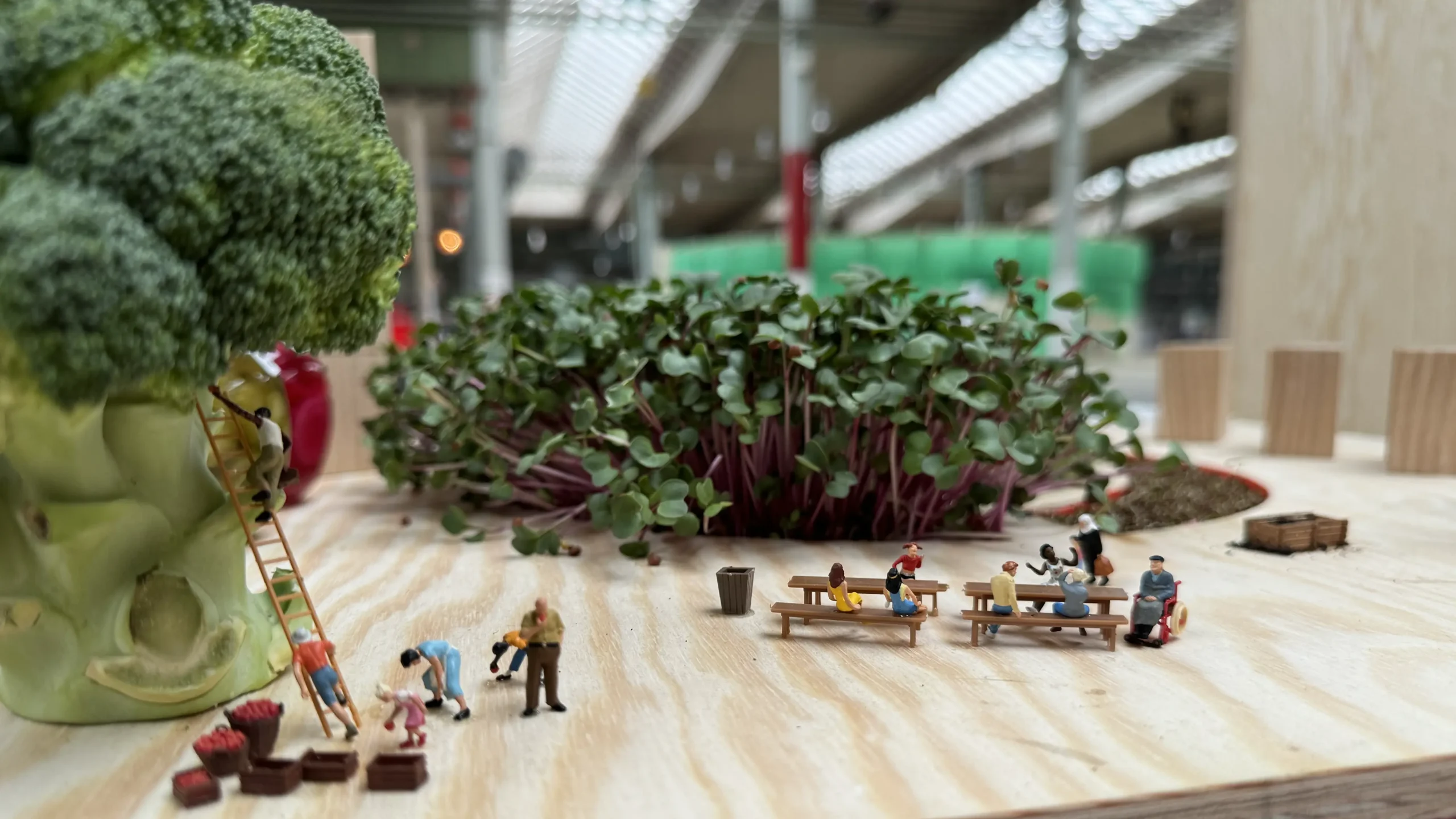
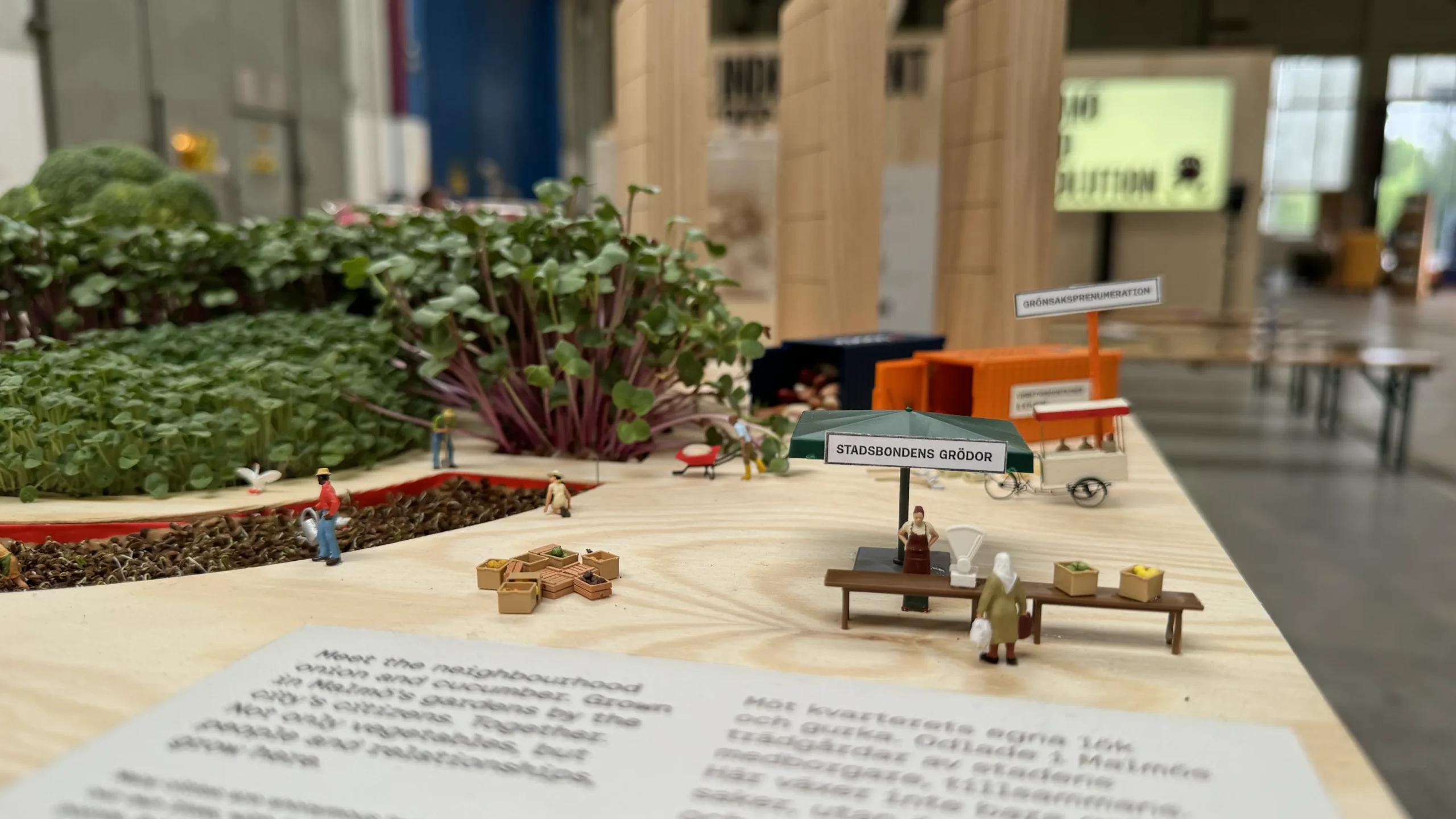
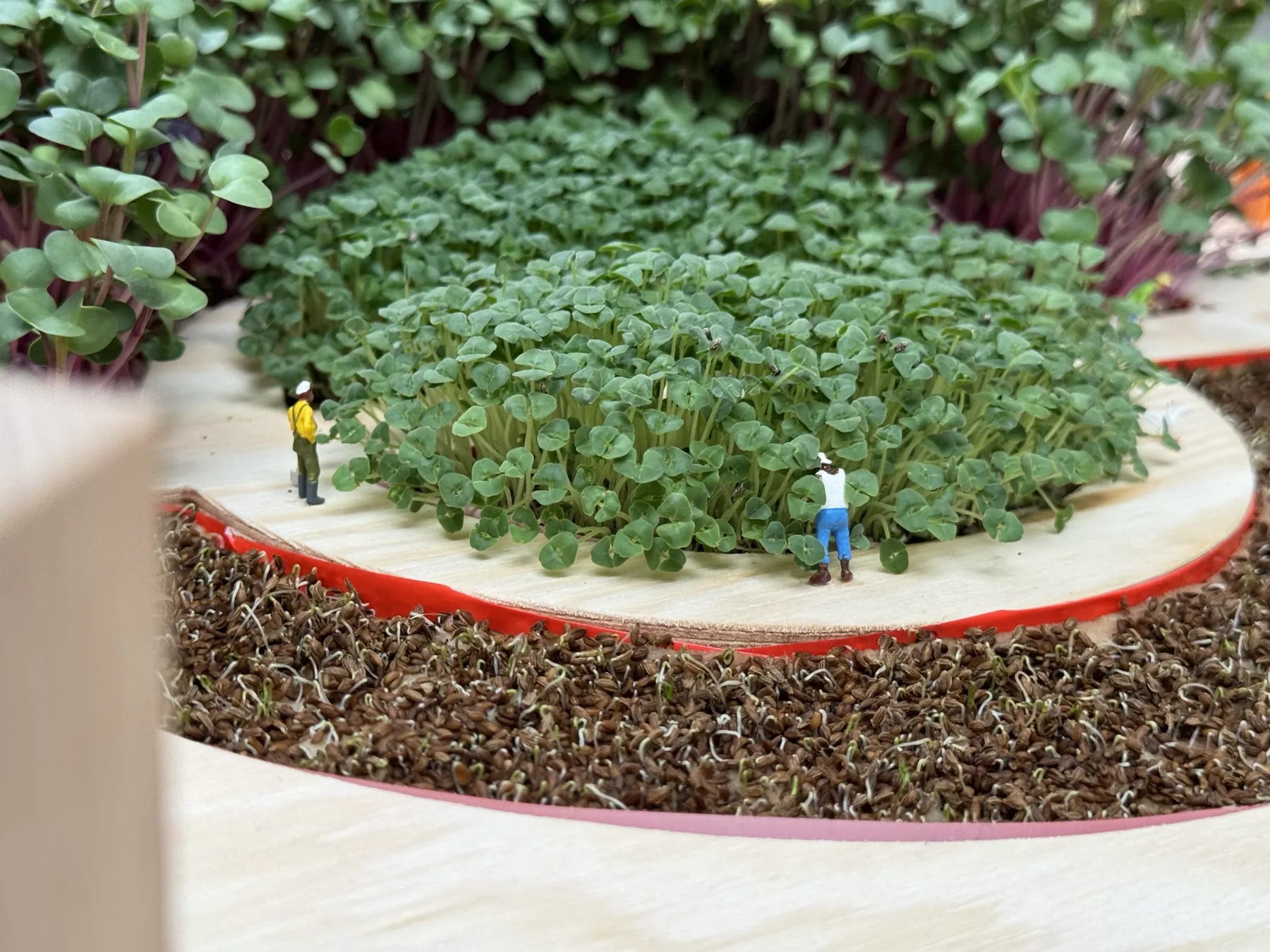
Many cities feel anonymous, with few shared connections. In the food city, Rosengård thrives with community gardens and farms, bringing people and food closer together. This scene is warm and shared, people growing food side by side.
The Patty Södra Innerstaden
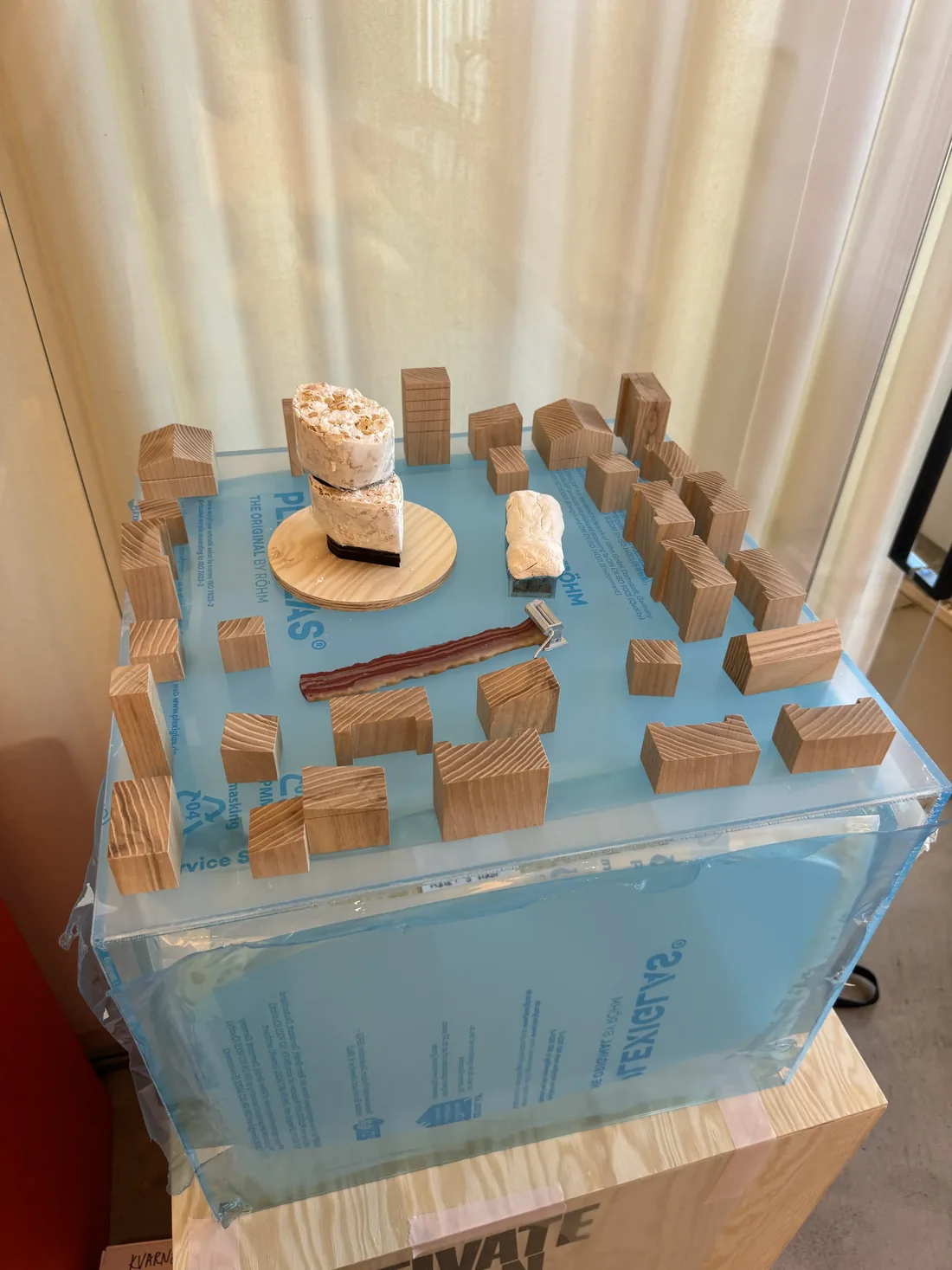
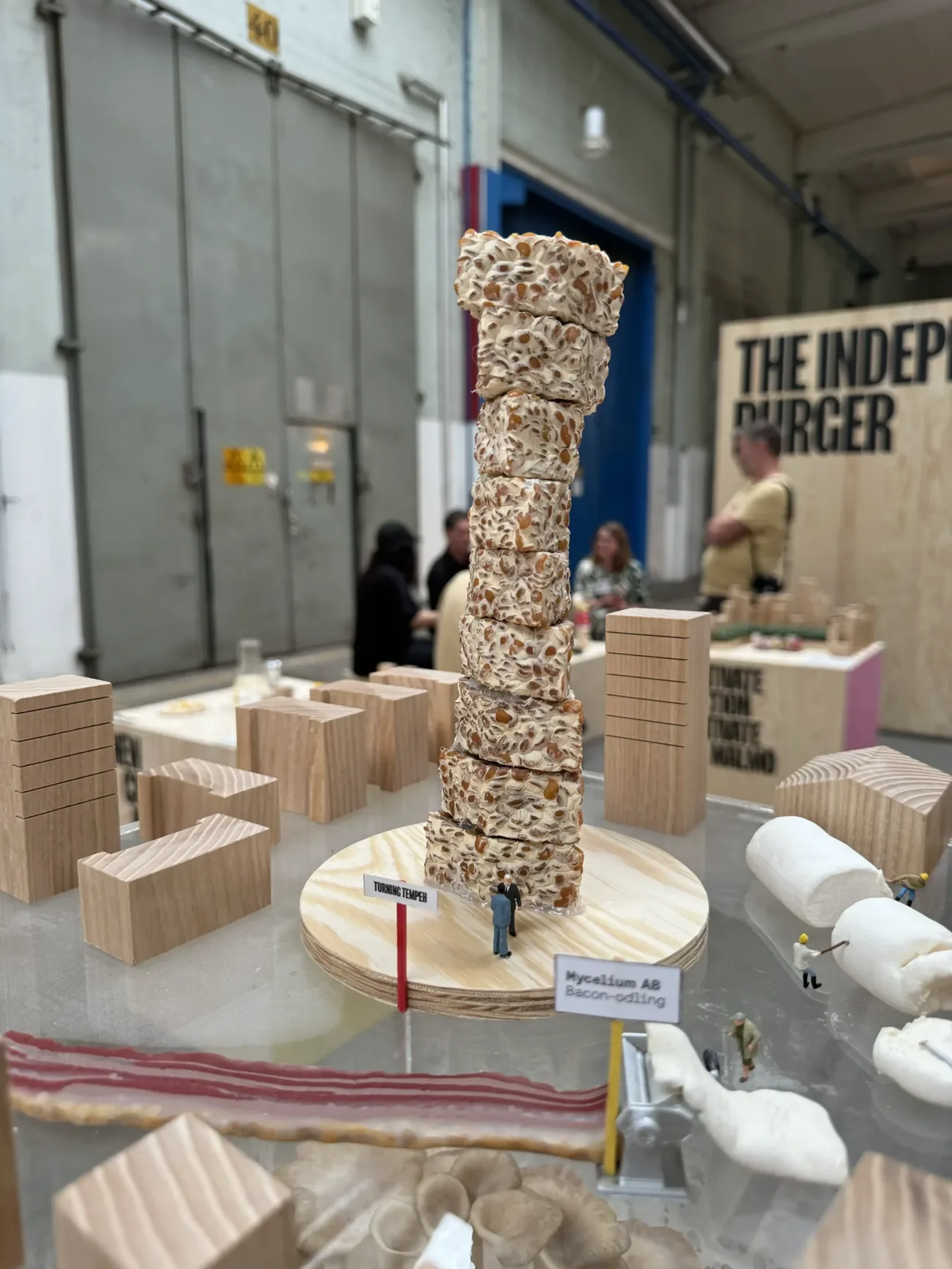
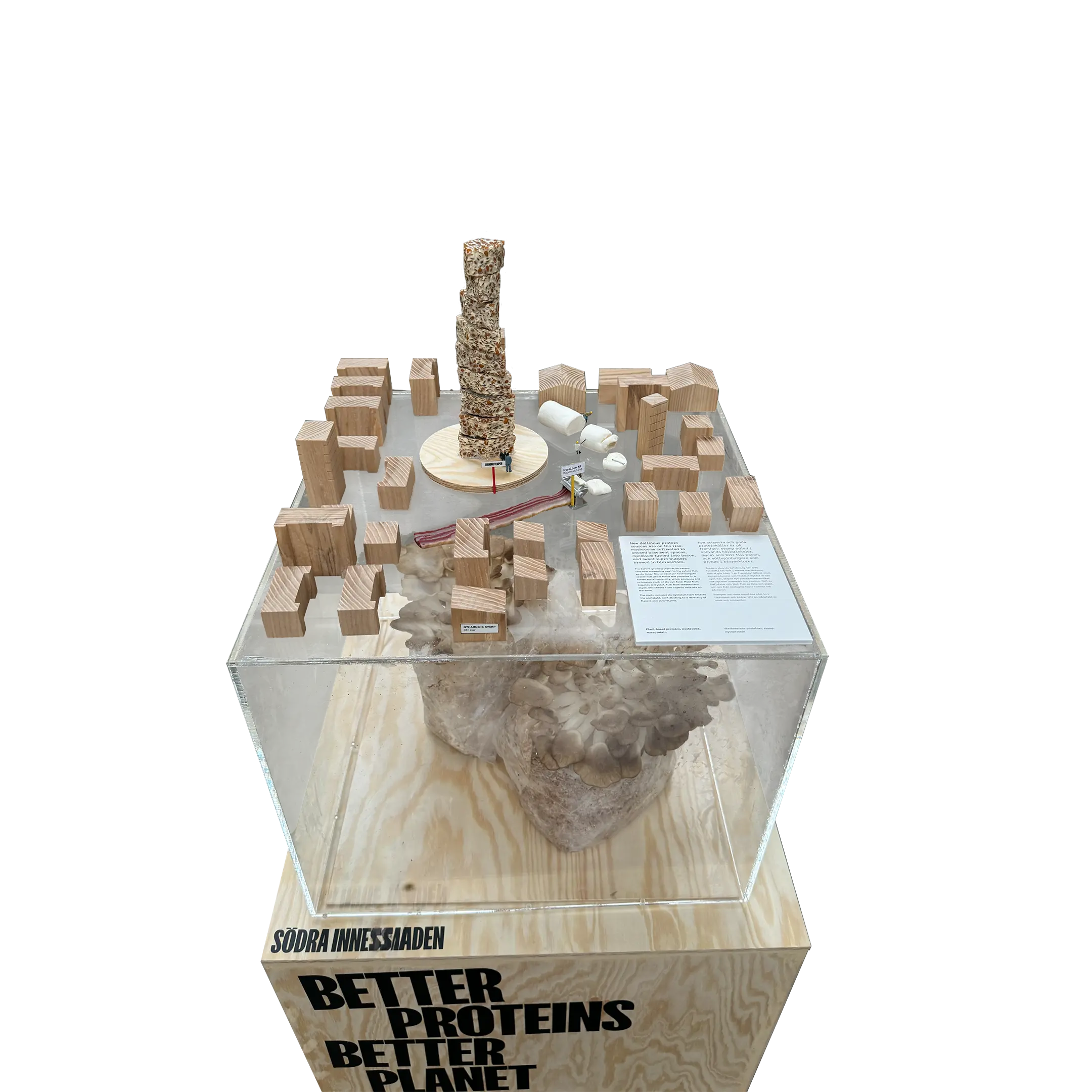
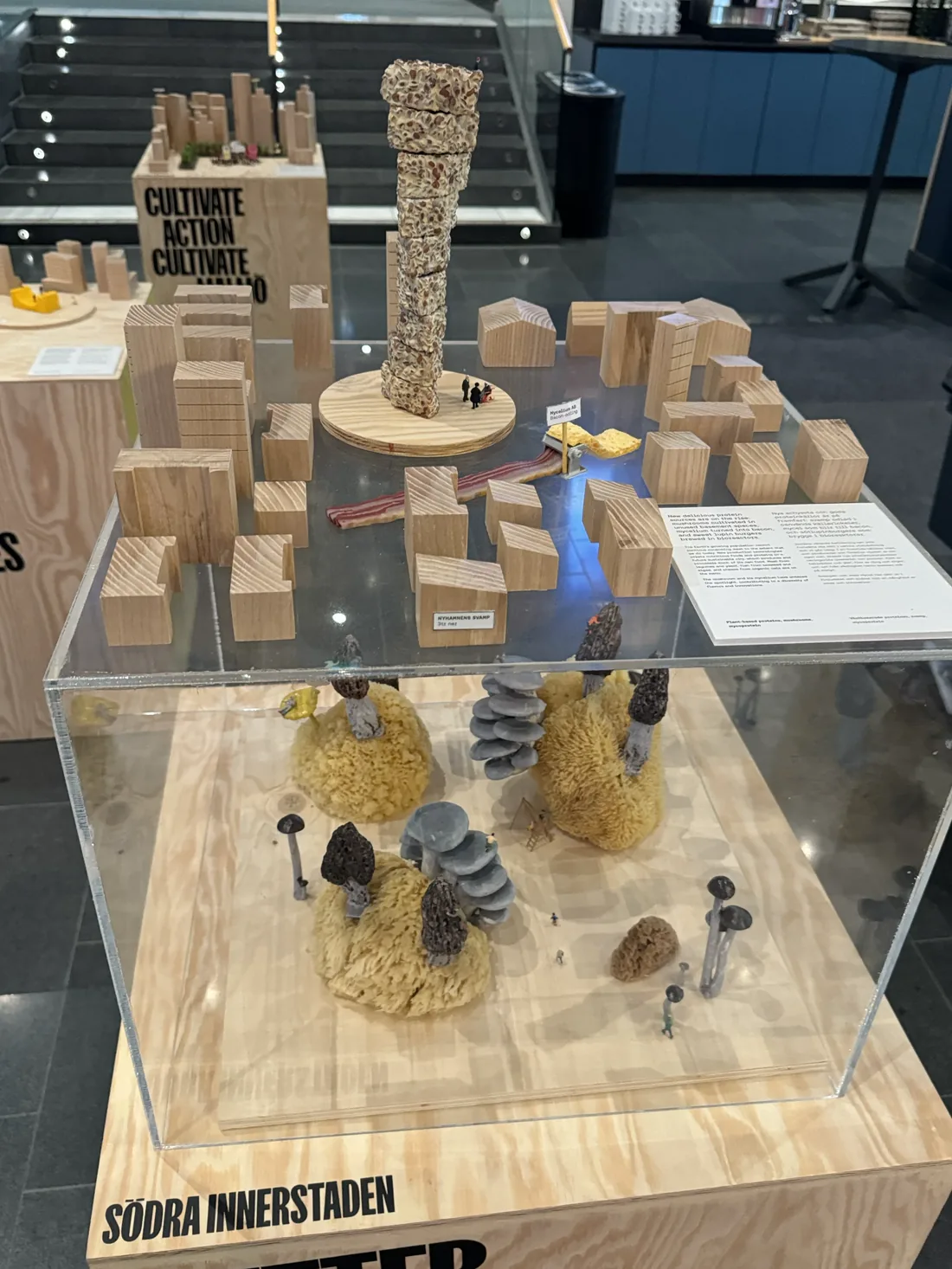
We can't sustain today's meat consumption, so new technologies make protein from mushrooms, legumes, yeast and seaweed. The landmark Turning Torso has become Turning Tempeh, built from dried tempeh. A tiny grandma presses bacon out of mycelium with a pasta machine, to make new food feel homely.
The Cheese Nyhamnen
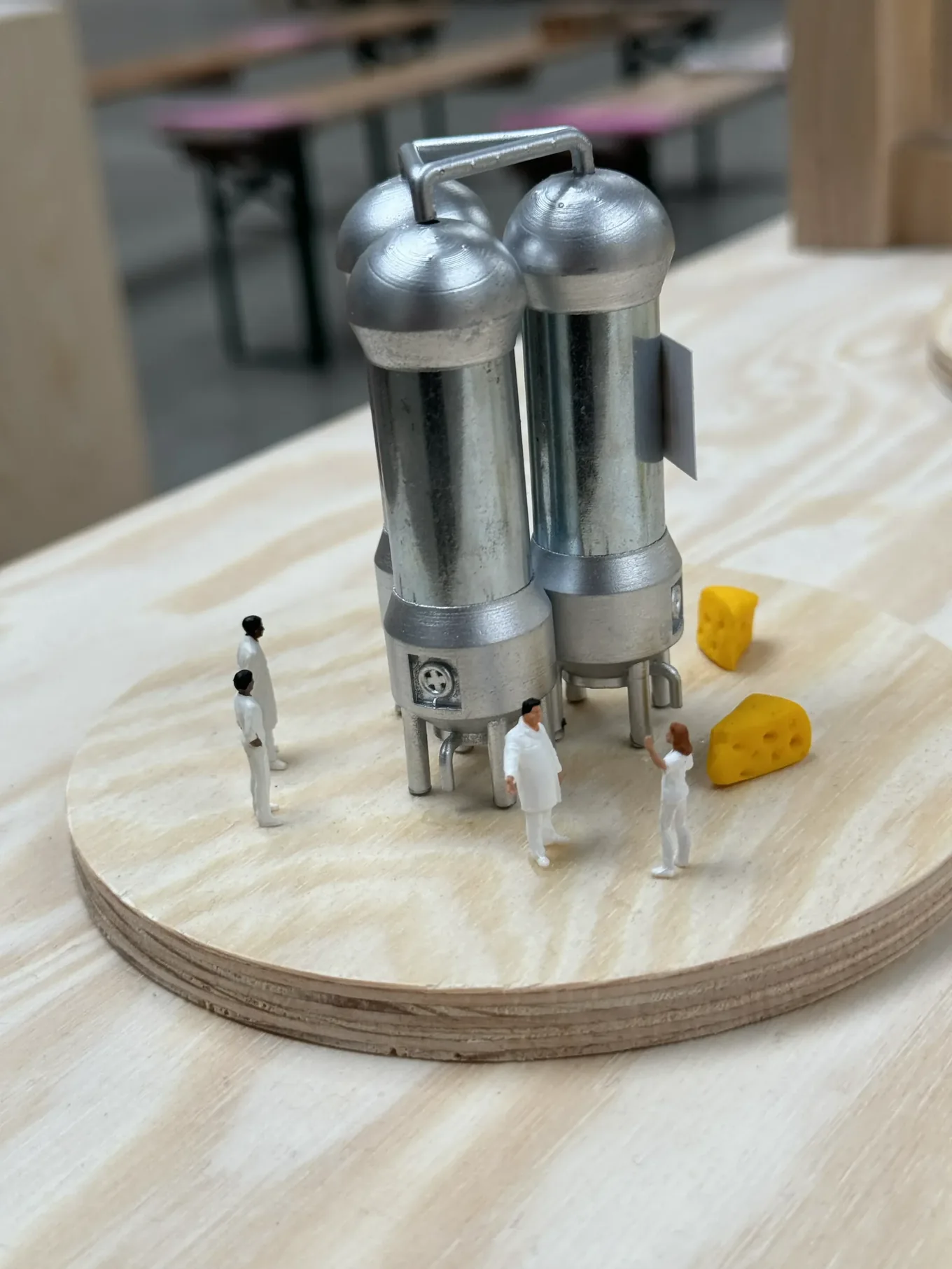
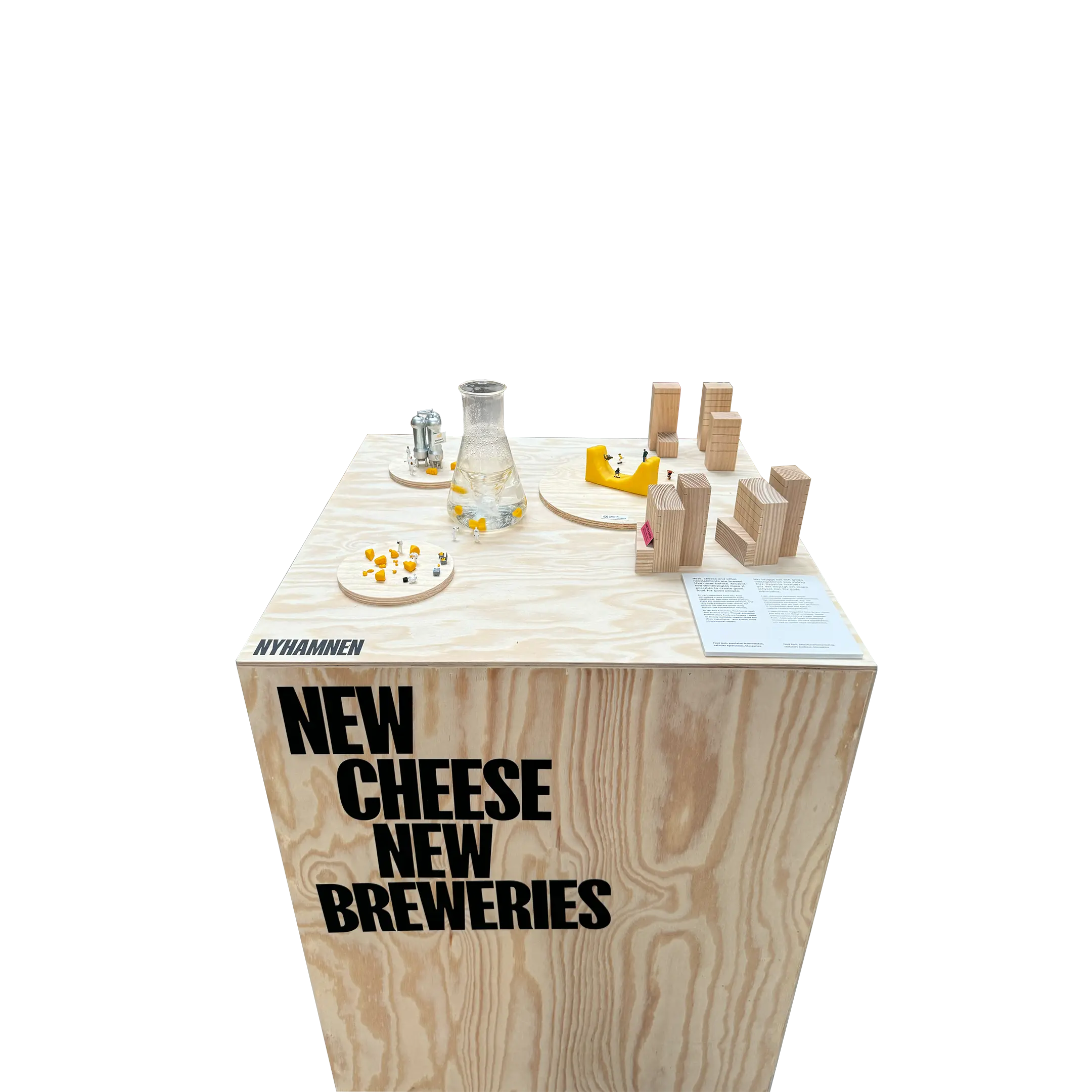
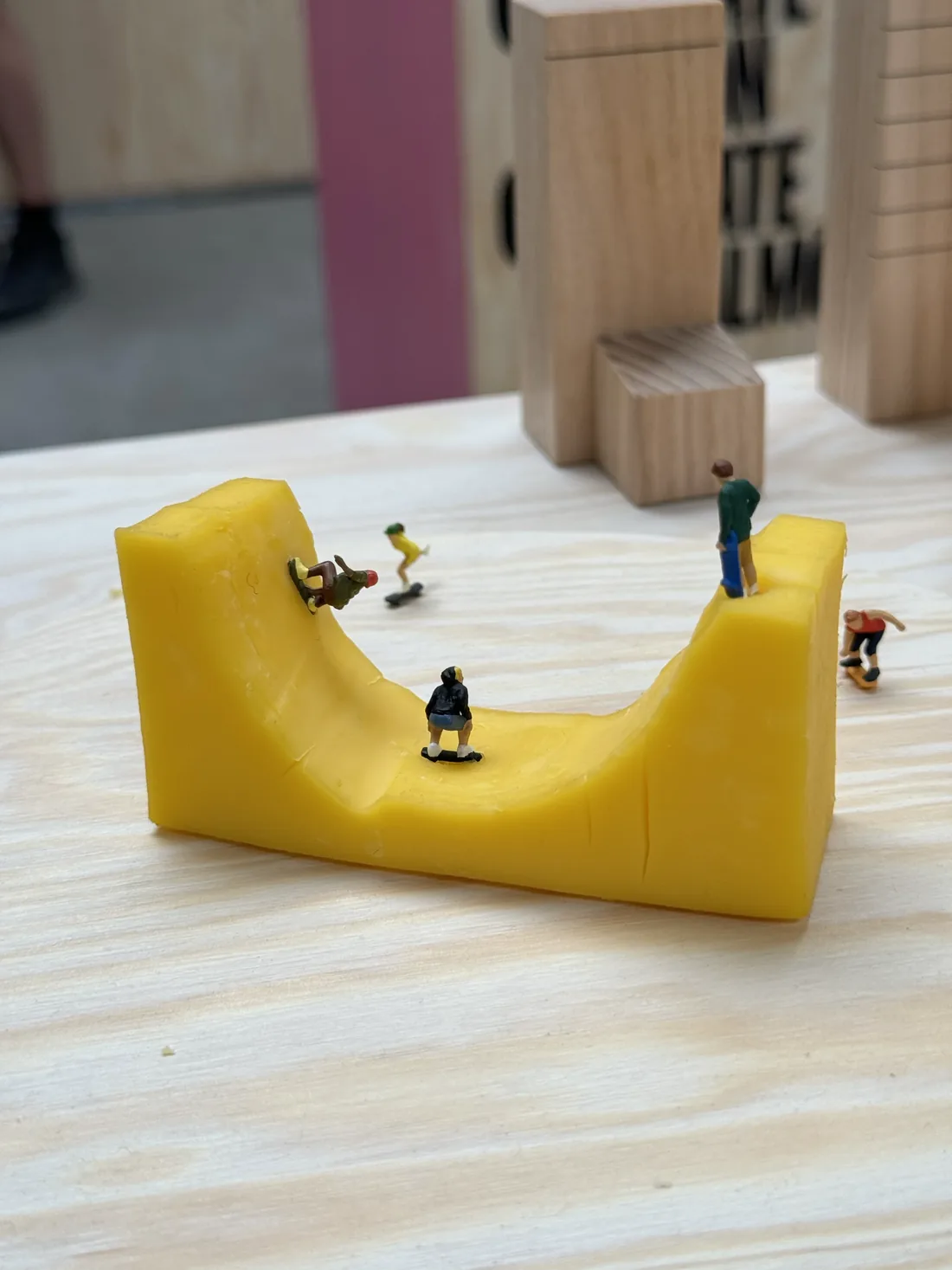
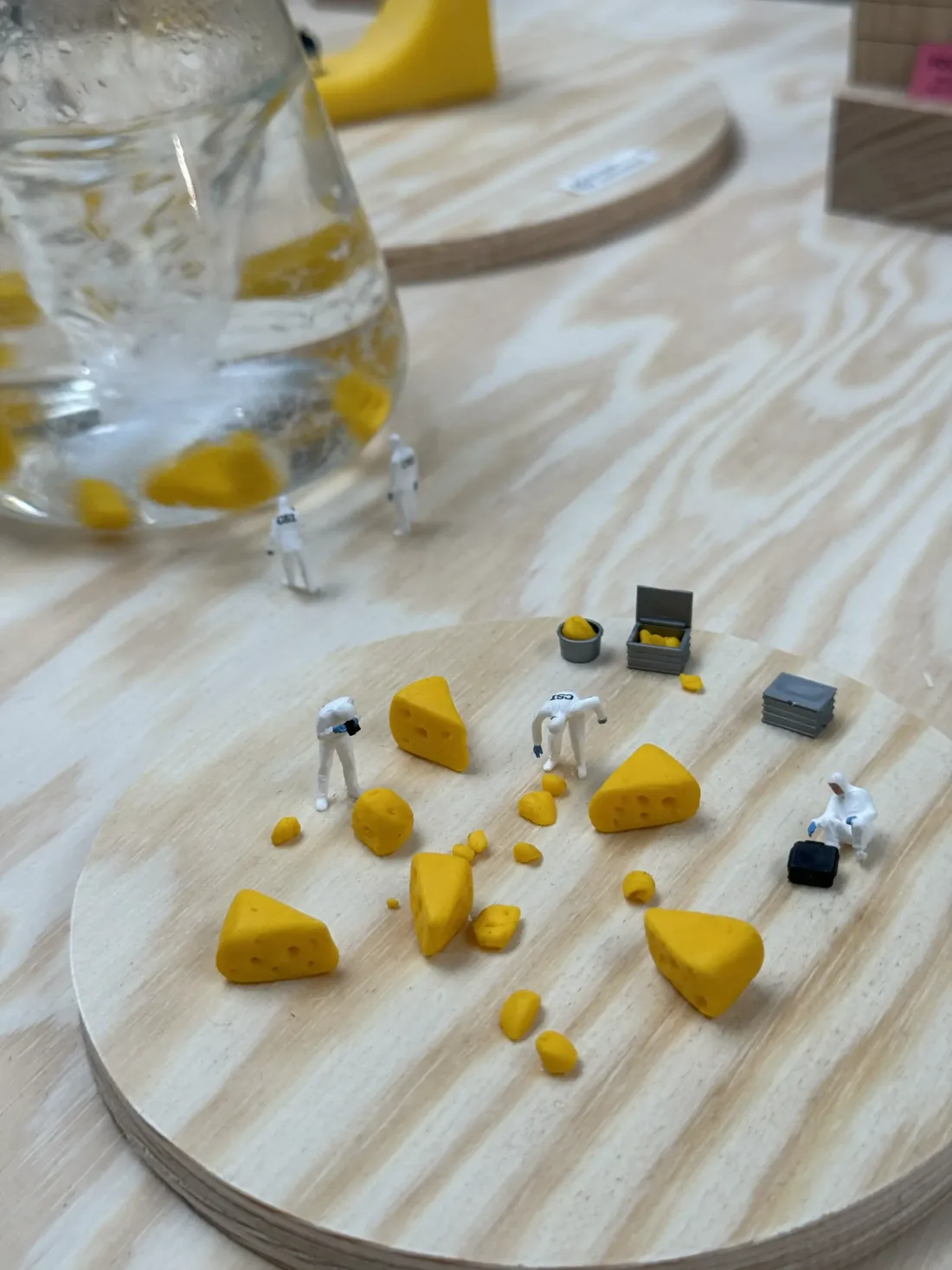
A research lab where food enthusiasts and scientists brew dairy-free cheese through fermentation. A magnetic stirrer keeps clay cheese swirling in water at the centre of the scene, while lab workers study it to learn how to brew. Next to it, people skate on a ramp, a nod to Malmö's skateparks.
The Toppings Stortorget
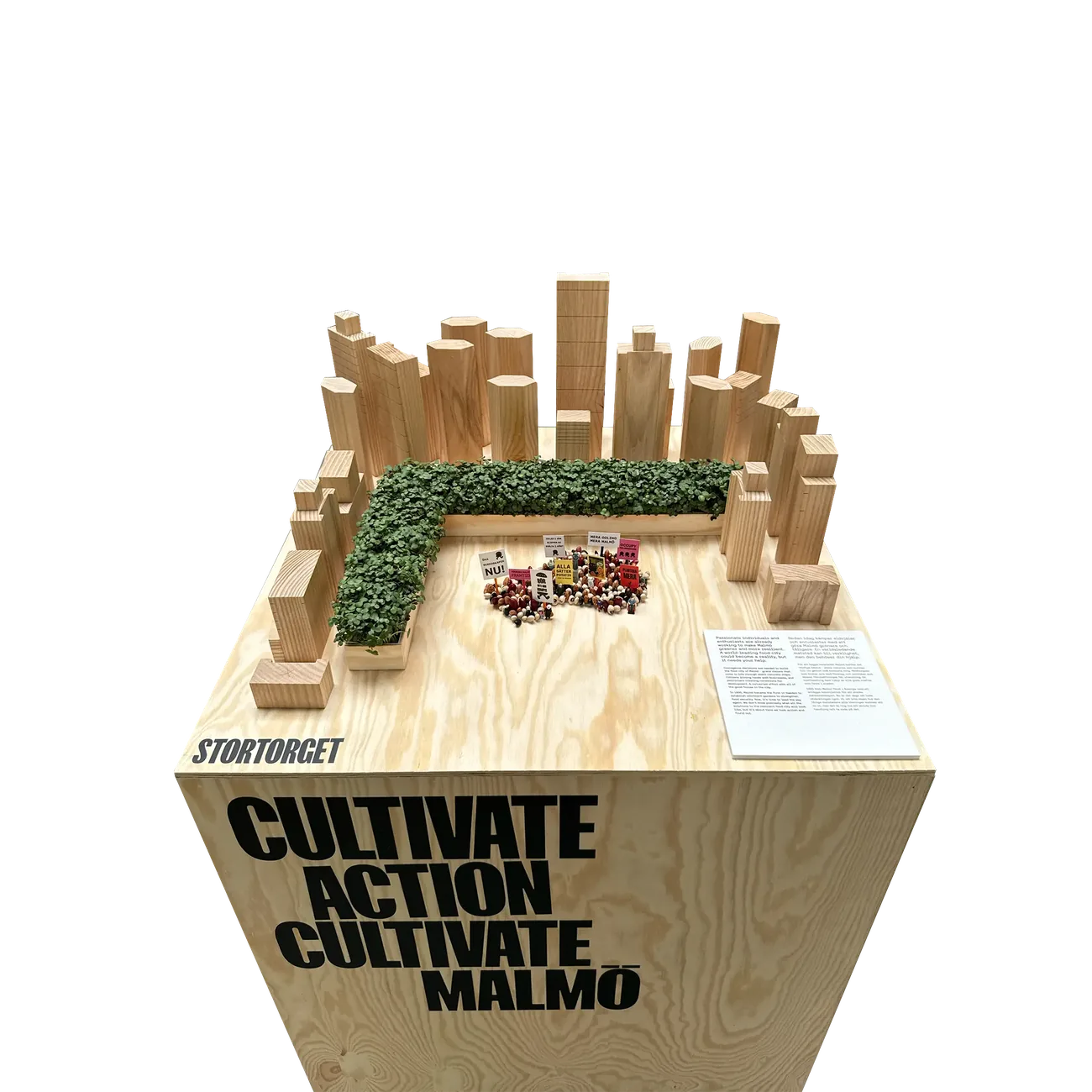
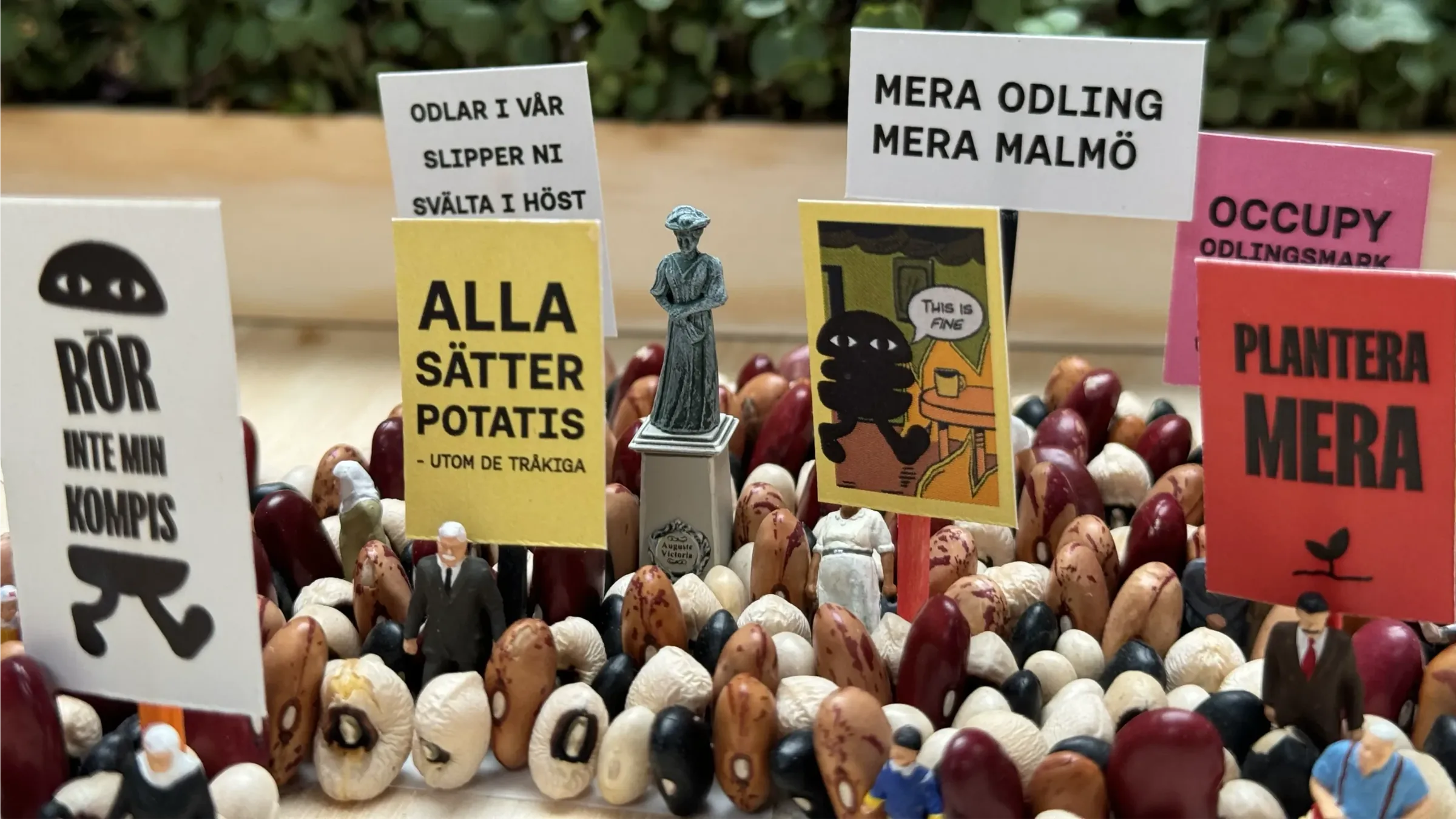
The food city also needs people to make their voices heard. Here, beans take to the streets with protest signs.
Making the living last
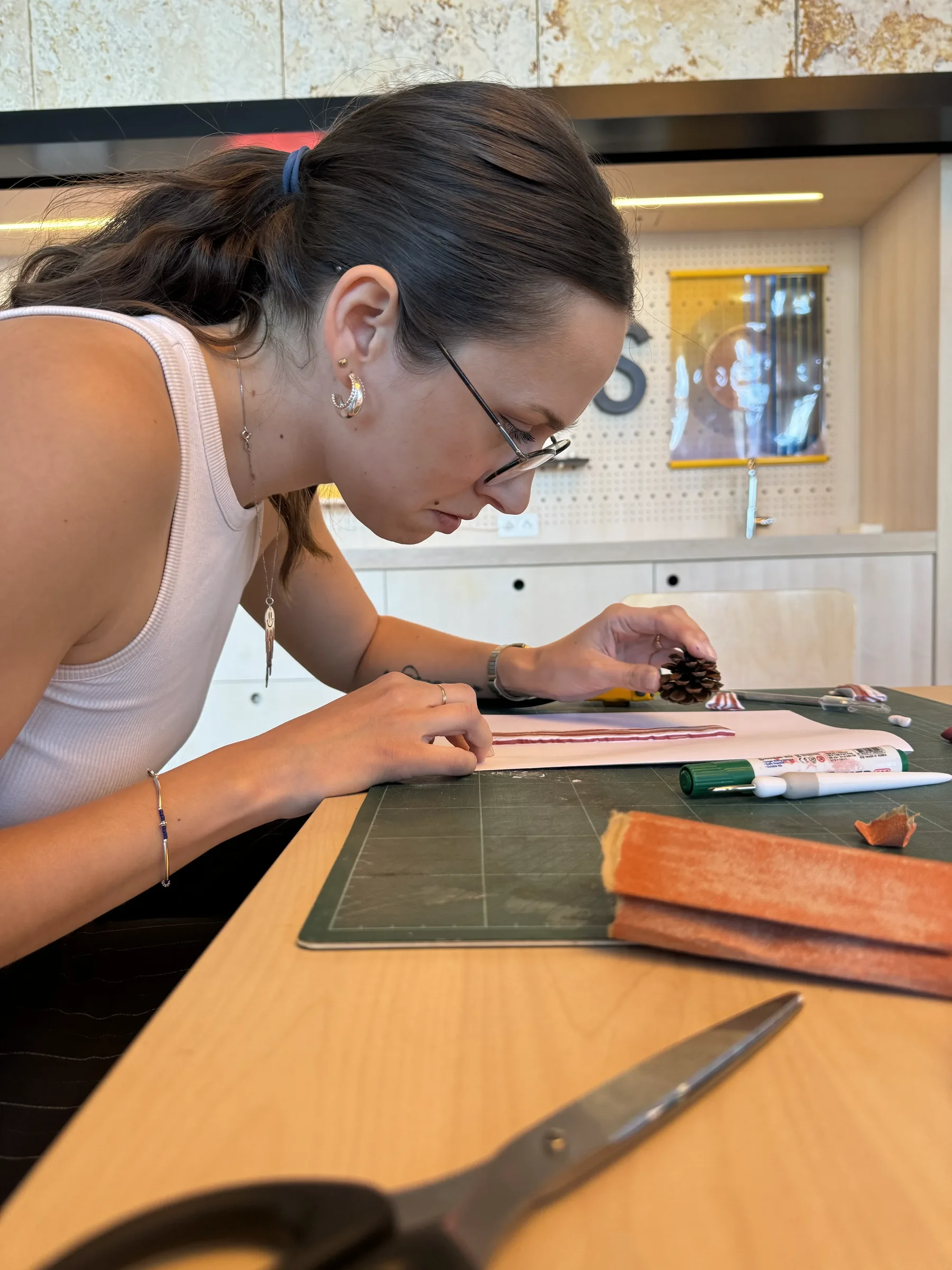
Freelance, 2024The first version was full of living things like microgreens and mushrooms. They looked great and lasted a couple of days. When the exhibition got a permanent home in Malmö in 2024, they had to be replaced with something that could last for years.
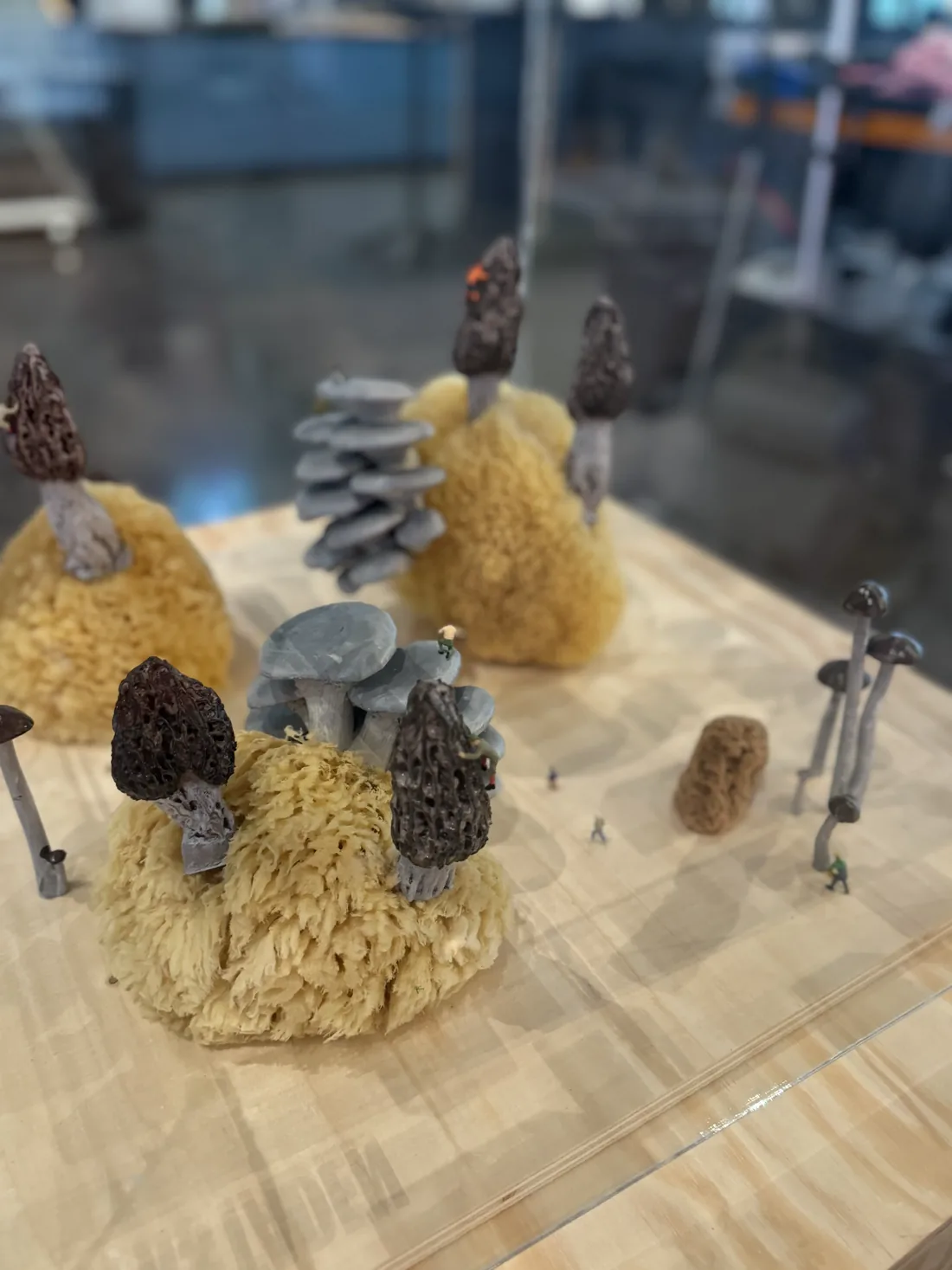
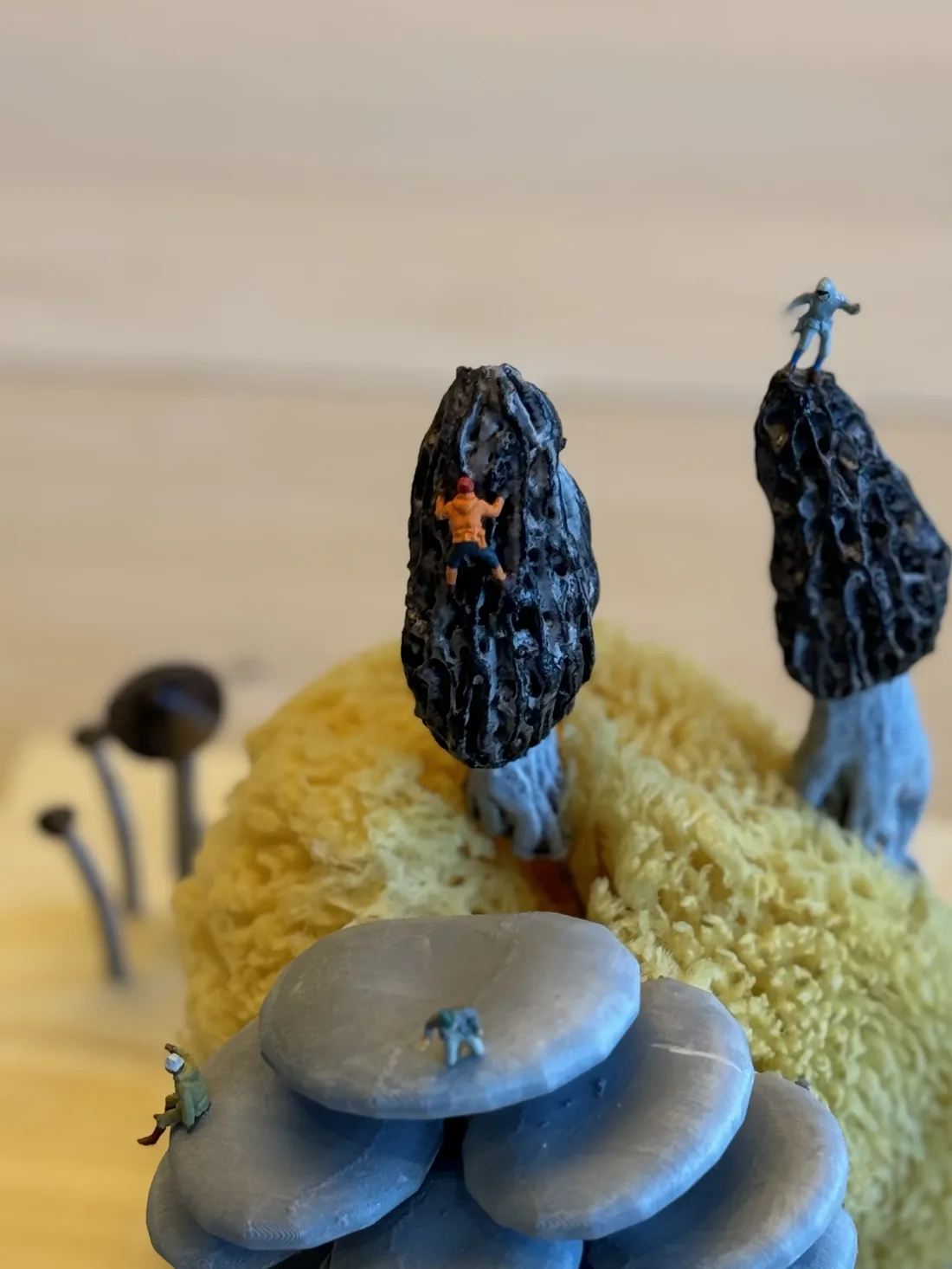
Trying to copy them would never be as good as the real thing, so I went the other way: artistic interpretations that capture the feeling rather than the plant. The community garden became softer and more embracing. Under the city I built a mushroom forest where tiny people climb, play and wander, made from natural watercolour sponges and 3D-printed mushrooms. I worked closely with SALLY to make sure the content stayed right.
Reflection
An exhibition is so much easier to take in than a report. But the real value was in showing what the goal means in practice: which resources we don't use today but could, how they would change the look of the city, and which businesses could grow out of them. You can point at a building and tell how it becomes a valuable part of the ecosystem.
Next project