Case 01 · Interactive object
Chamber Obscura
Can an echo chamber fit in a box?
Overview
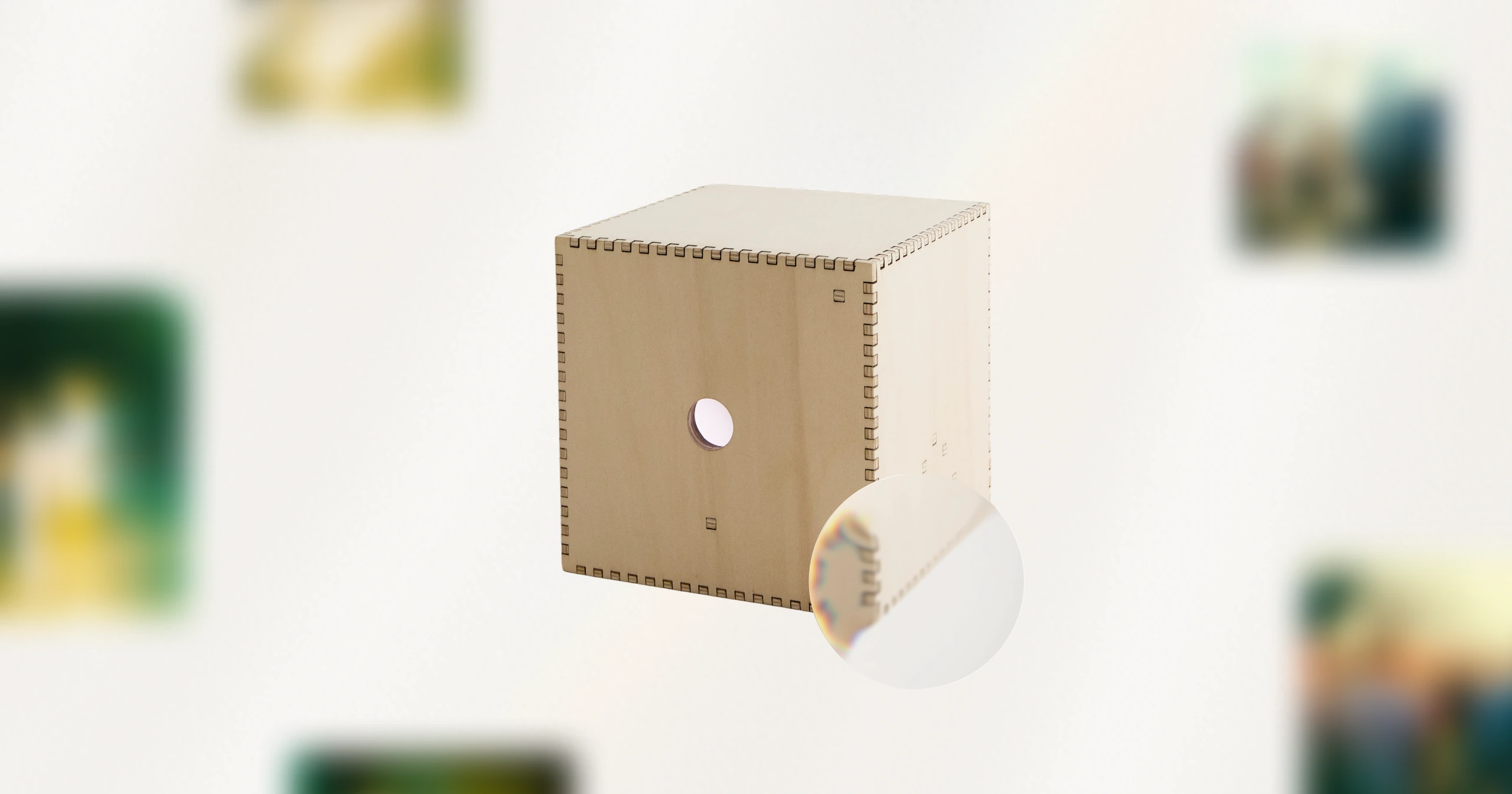
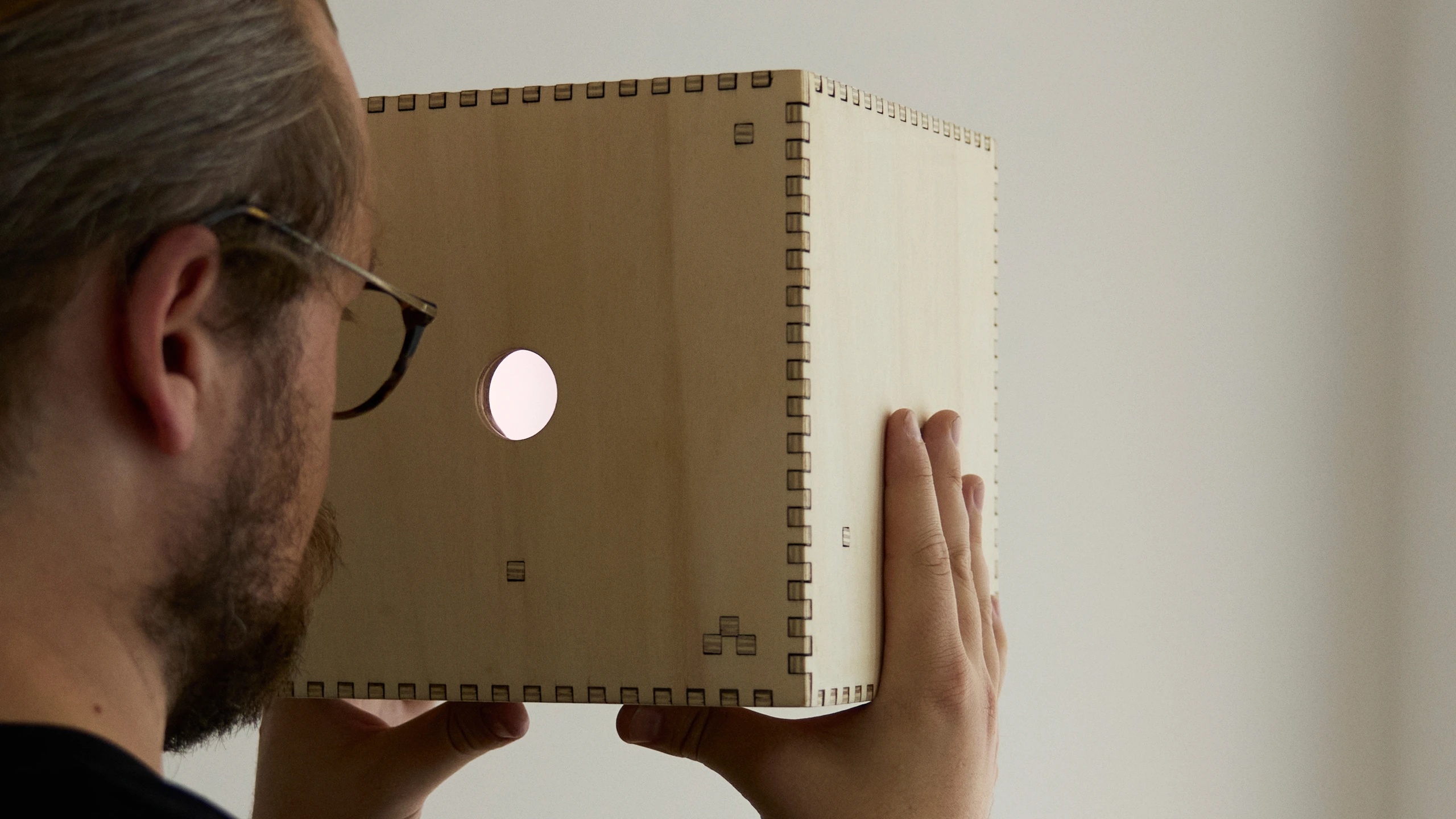
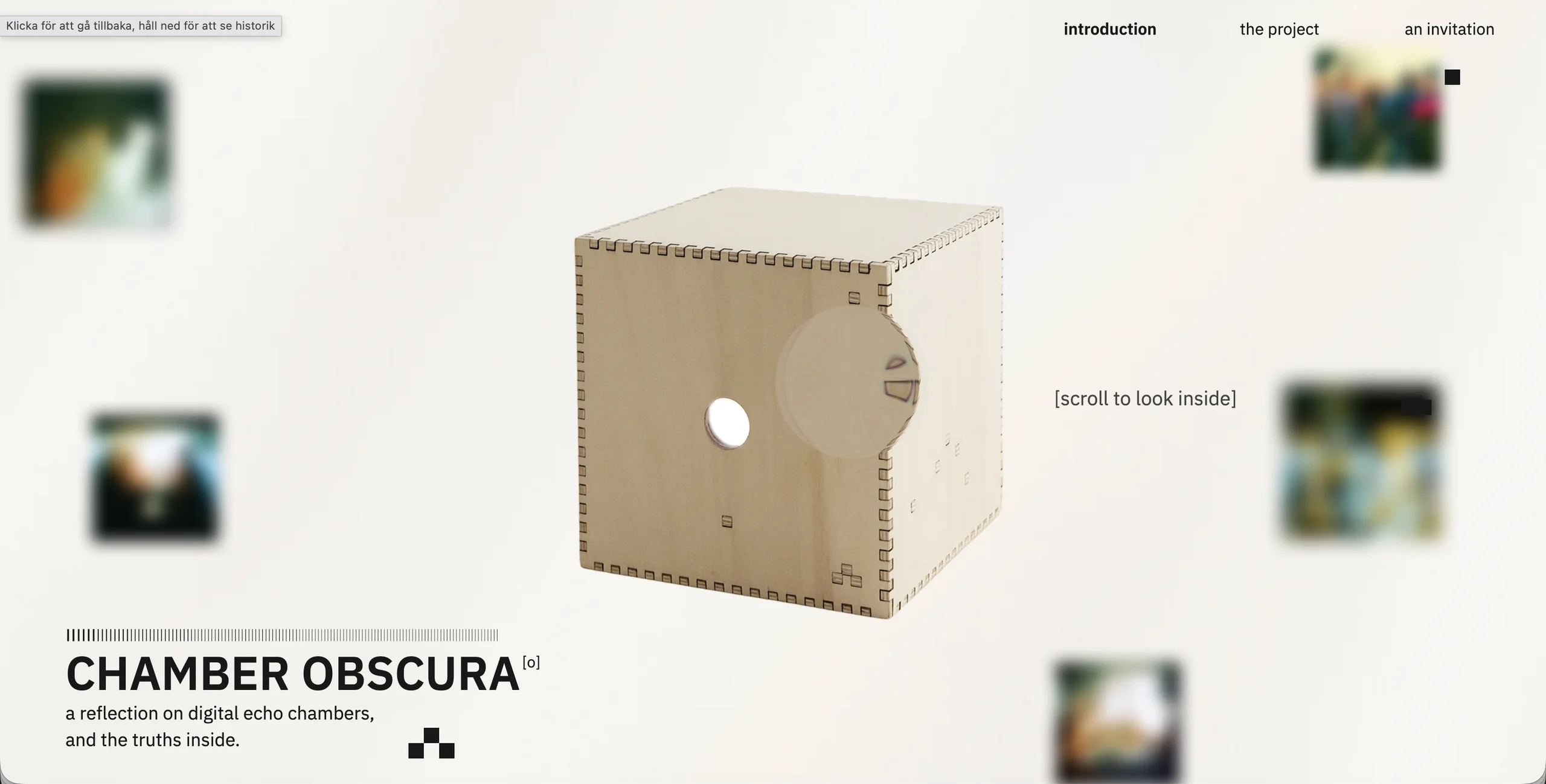
Chamber Obscura is a small wooden box you peek into. Inside, you see a newly generated AI image that no one else will ever see. It’s yours for as long as you keep looking. When you look away, it’s gone forever.
I created Chamber Obscura to explore digital echo chambers and make the abstract experience of personalized feeds physical. Something to gather around and talk about, when our experience online is so personal that we can only show each other glimpses of it.
- My role
- I developed the concept, designed the experience, built the box and the hardware, wrote the prompt system behind the images, and prototyped the software and website with the help of AI coding tools.
- Thanks to
- Karin Bodin and Elvin Kandell for all our discussions and support, Fredrik Bengtsson for photos and support, and Viktor Wennström for the soldering.
- Website
- chamber-obscura.com ↗
The problem
Our feeds are shaped by algorithms and by how we react to what we see. No two social media feeds are the same, and we experience different realities, without being able to show each other what we see.
It’s a very abstract, invisible and personal phenomenon. So I wanted to turn it into something you could see with your own eyes.
The concept
The concept is simple. A new image is created the moment you look into the box. You are its first and only viewer. It is never saved, and it can never be shown to anyone else.
The images are generated live, rather than picked from a bank made in advance. It would have been cheaper and easier, but it would have defeated the purpose of the whole idea. Generating each image in the moment is the only way to stay true to the idea that no one else will ever see it. It also shows how fast and easy it has become to create AI images today.
The project went through several names and framings before it landed. The box stayed close to the first idea.
Manifesting the box
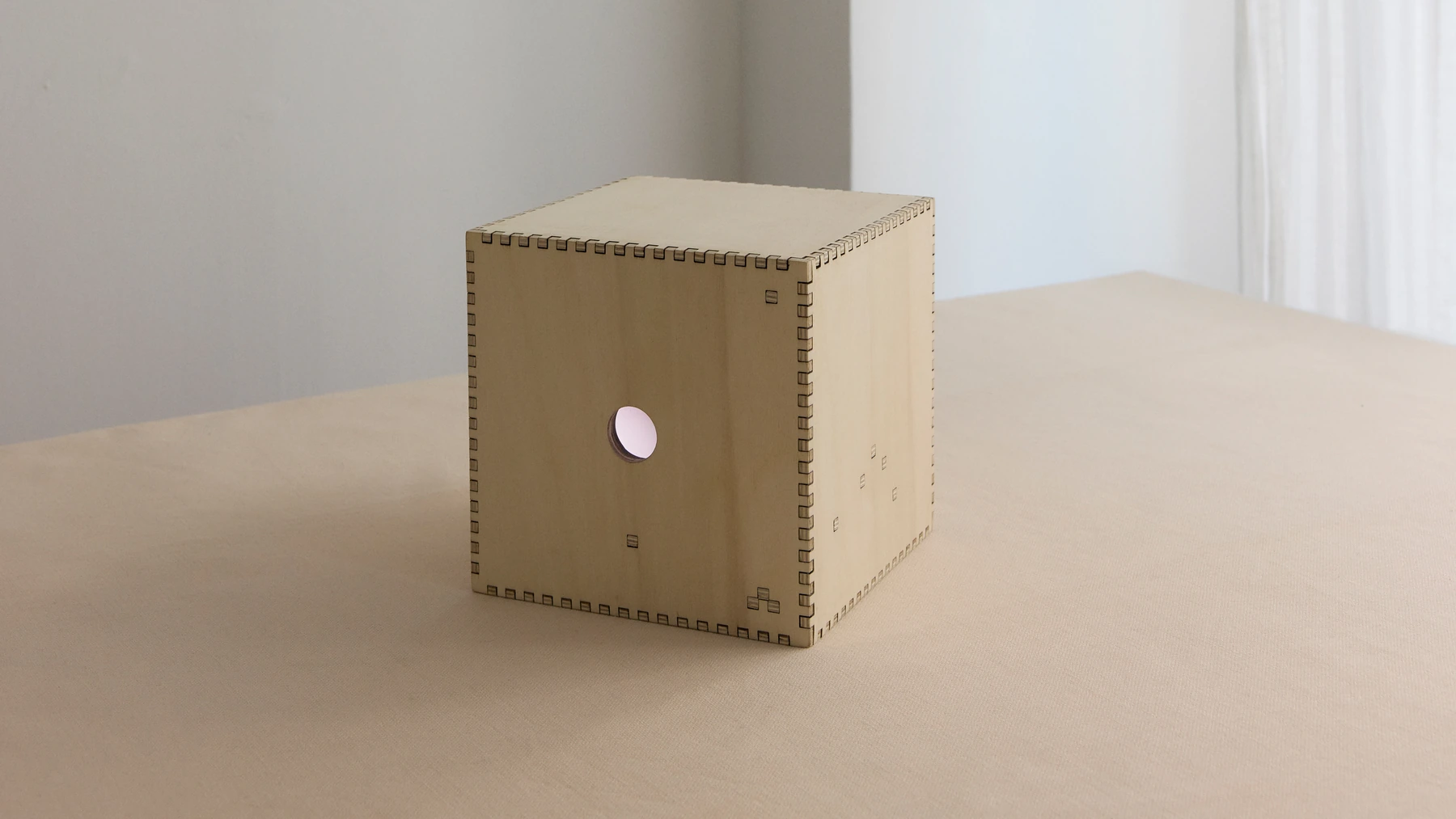
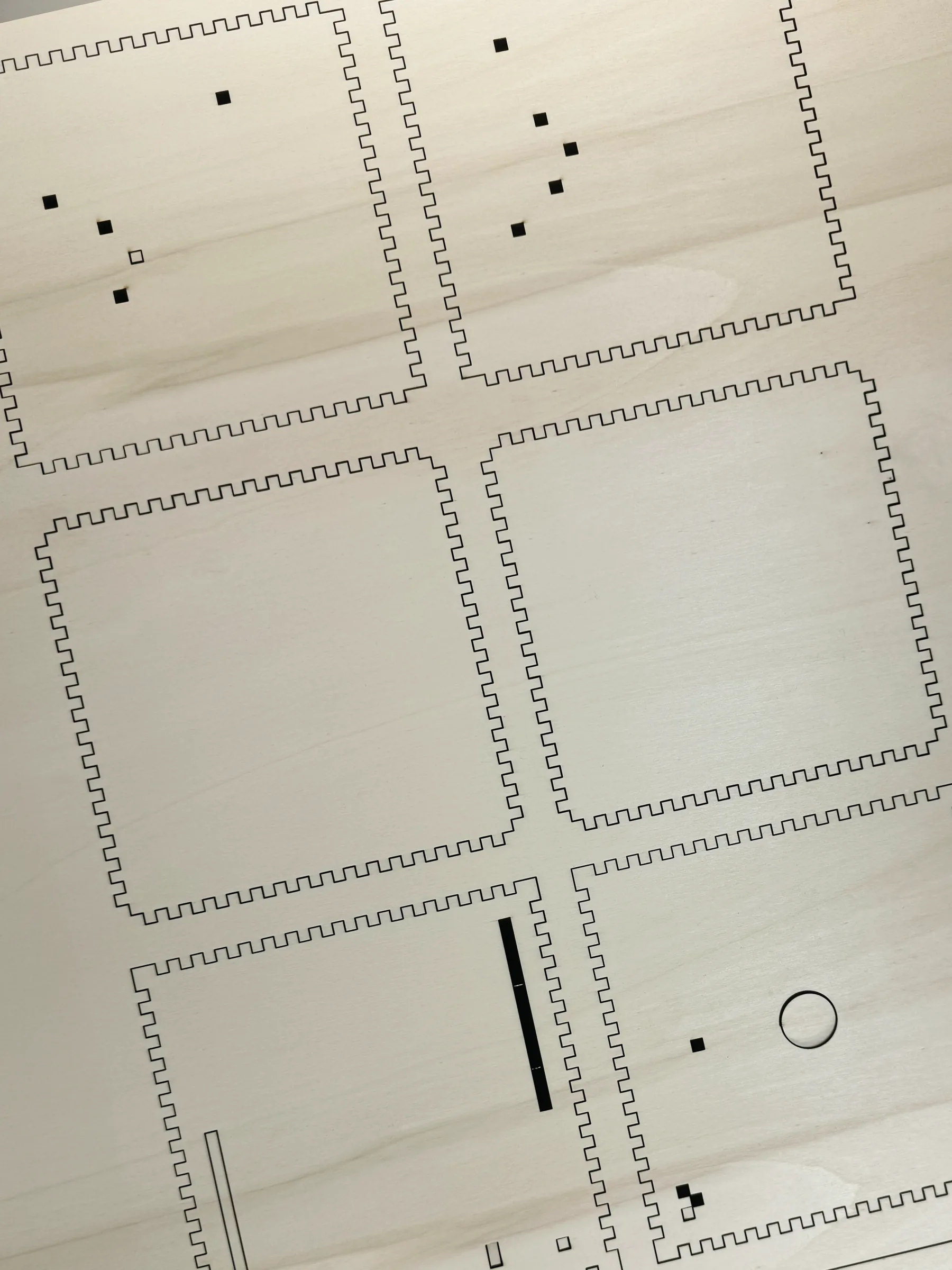
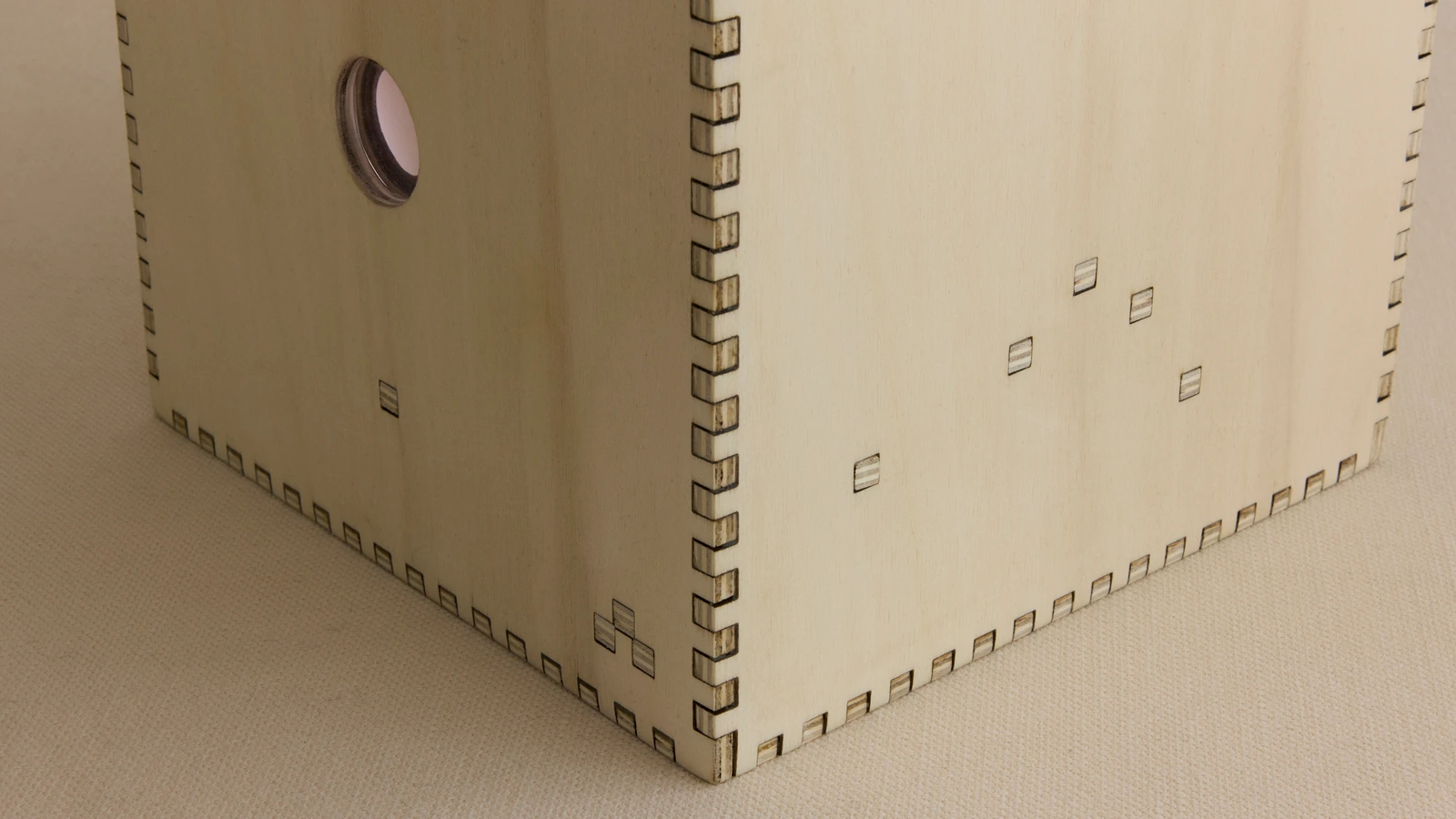
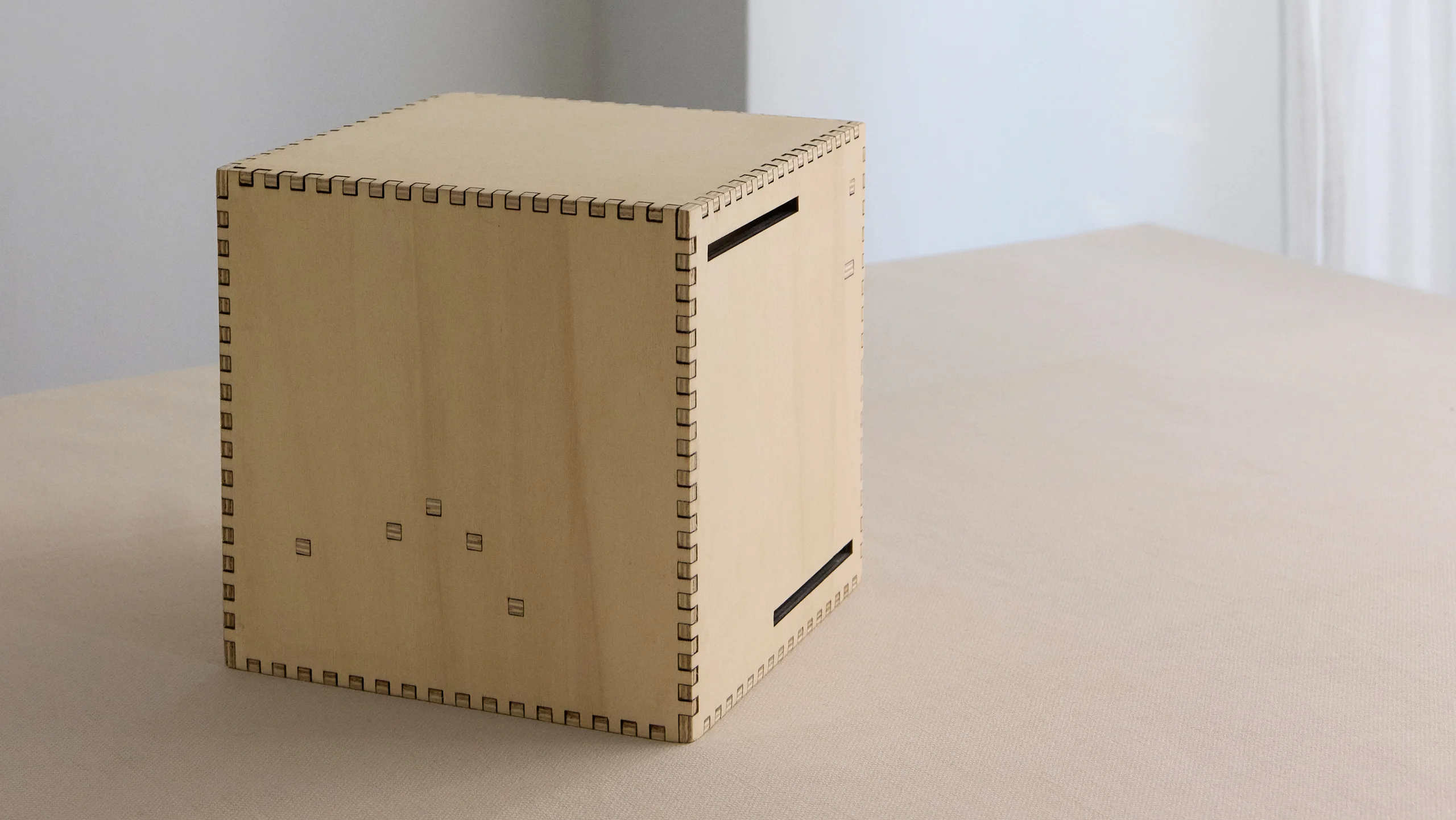
The box is laser-cut birch plywood, 21 × 21 × 21 cm. The size was chosen so I could design the box in a grid of 6 mm pixels. This turned the finger joints into pixels on every side. I also added symbols to guide the user, bringing a very digital form into a very organic material.
Inside sits a Raspberry Pi, a screen and a distance sensor that notices when someone peeks in.
The images come from a prompt where everything is drawn at random: objects, humans, animals, settings and actions. Writing the prompt became a design task in itself: the images had to feel personalized and slightly unreal, without ever repeating. I also wanted to keep a certain quality, so I ran the prompt a lot as quality control.
Much of the work was tuning through testing, like how close you need to be before the sensor reacts, and how the image is framed on the screen.
Telling it without showing it
Chamber Obscura can only really be experienced by looking into it. That made the website a design problem of its own: how do you capture the feeling of something that only works in person, without showing the images it is all about?
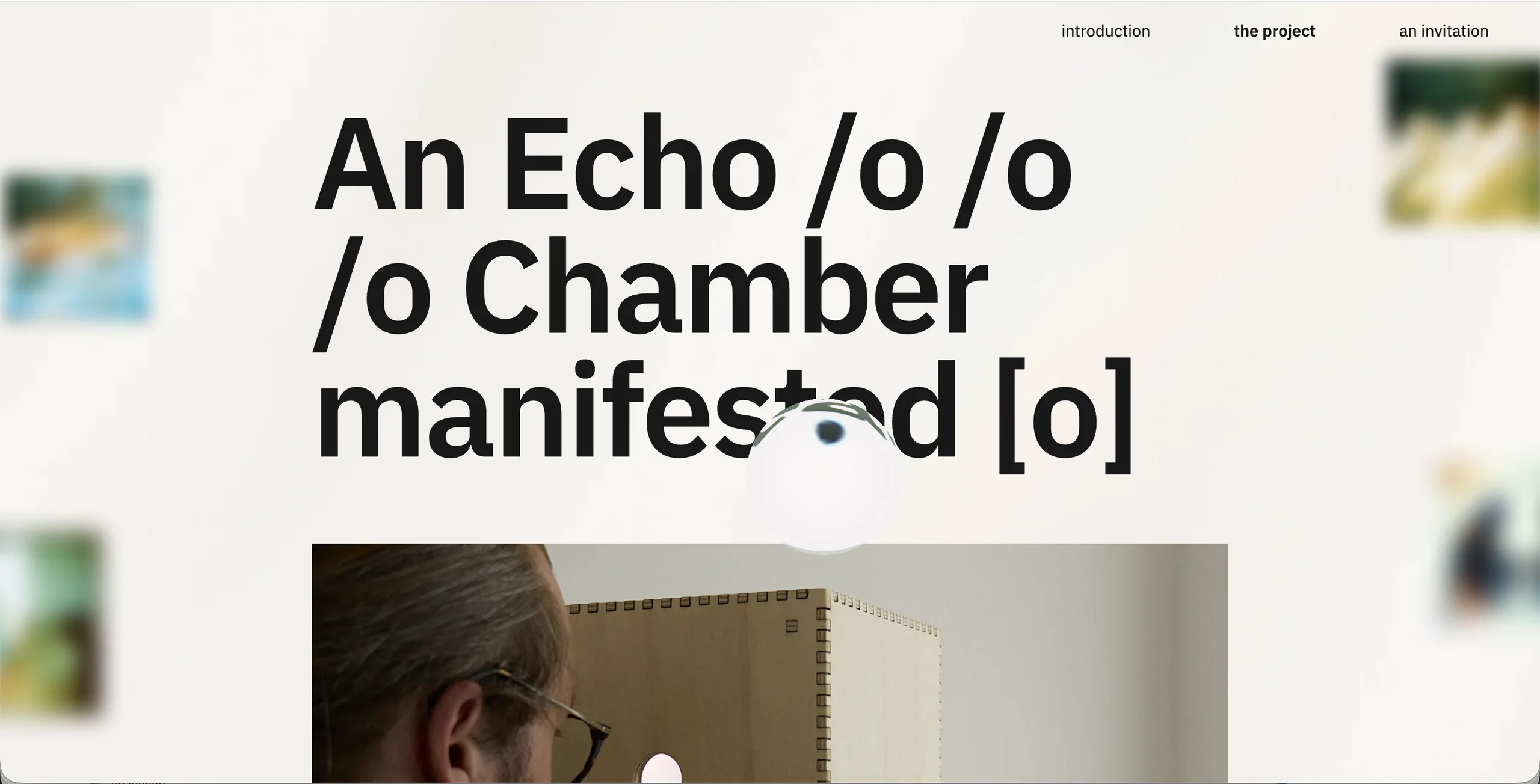
I used images from when I tested the prompt, blurred them and set them floating in the background of the website. This creates the feeling of a universe of its own, full of images you can almost see. You might not notice it on your first visit, but once you have looked into the box, you may recognize the colors and feel of the blurred images.
The lens from the box became a central design element as well. You see everything through it, the way a lens is meant to amplify what is behind it. The pixels on the box also moved onto the site as small black pixels that blink in and out, adding movement and a bit of mystery.
I wanted the site to feel like stepping into the experience without becoming hard to navigate. I limited the fade-in to the beginning, where short texts appear one at a time, and kept the words to a minimum. The project details, on the other hand, follow a classic website layout and are quick to scan.
Shared truth
Working on the project, I realized that echo chambers are about more than hearing what confirms what we already believe. They also take away the experiences we share and can check together. As more of what we see is generated just for us, that feels like the bigger question.
Chamber Obscura launched in October 2026, and I am inviting people to try it over a coffee. The next step is to learn from those conversations, and to find people and organizations to develop it further with.
Next project